


Piece 1 · At a glance
Uni or improved clinch: which wrap knot?
Tie a uni
for braid, heavy line and any job beyond tying on: it also joins two lines (the double uni), makes a loop for lure action and ties line to the reel spool. One knot, learned once, does it all.
Tie an improved clinch
for mono and fluorocarbon to hooks, lures, swivels and flies. It is quick, small and the classic knot most anglers learn first. Keep it out of braid, where it can slip.
In mono both hold about 85 to 95 percent of the line's strength when tied well. Wet them, seat them fully, and either one will land fish.
Piece 2 · Anatomy
The two knots, loose and pulled tight
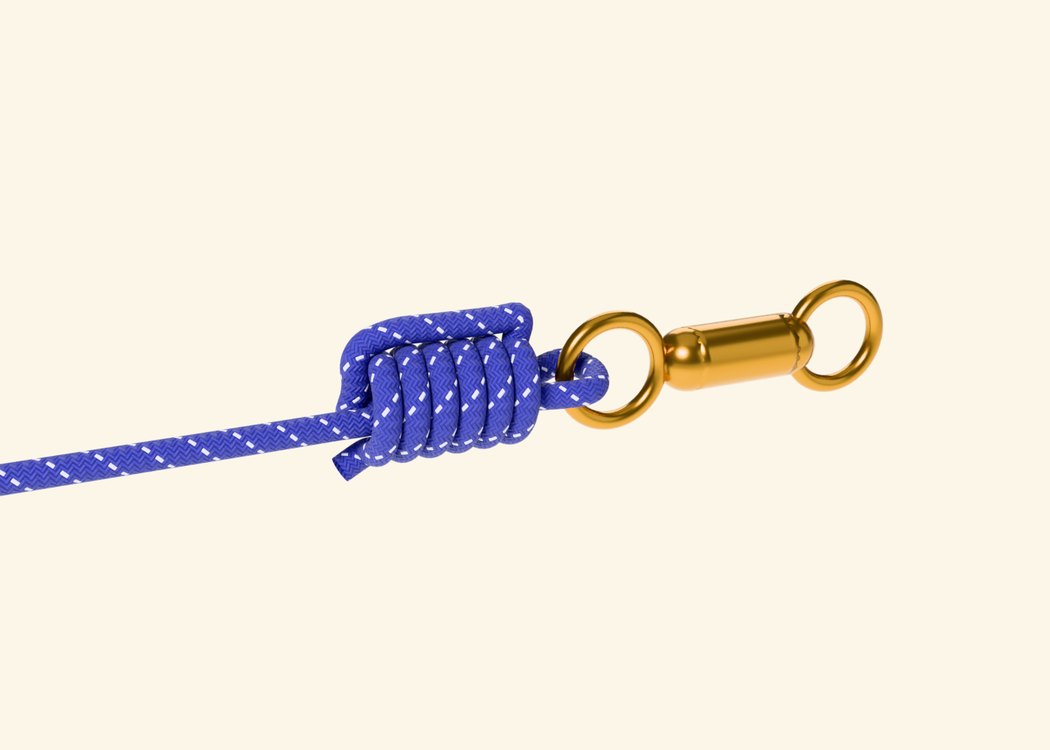
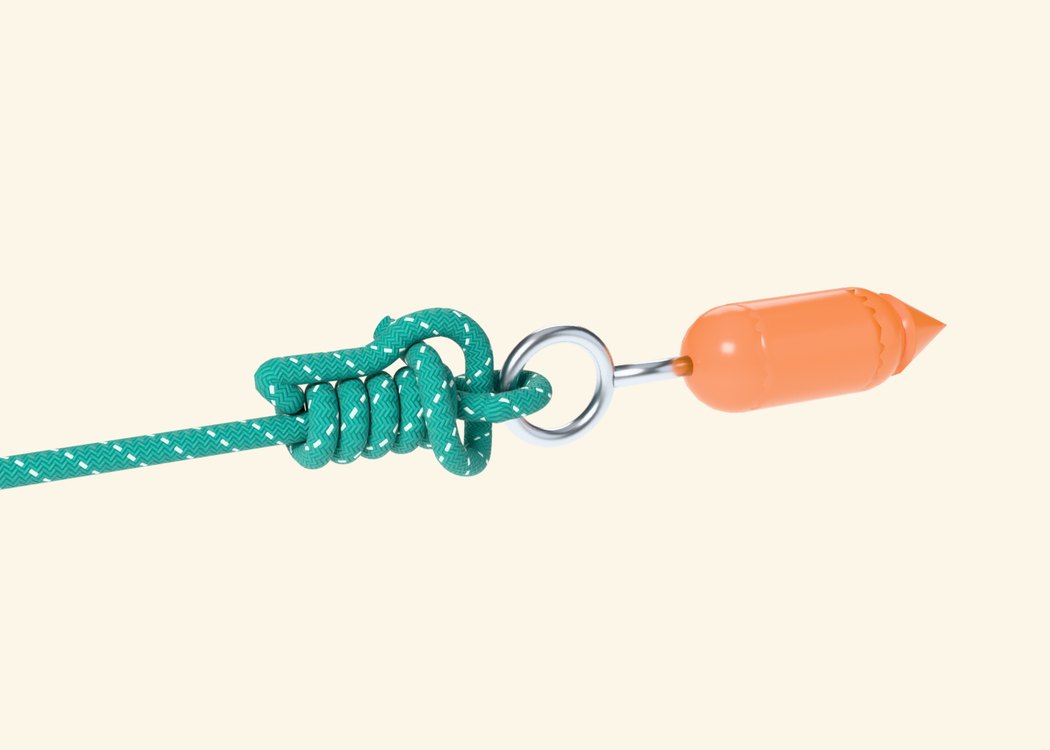
Both start the same way: about 15 cm (6 in) of line through the eye. The uni lays its end back along the main line and wraps round both, inside a loop. The improved clinch twists its end round the main line alone, then tucks it through the small loop by the eye and back through the big loop.
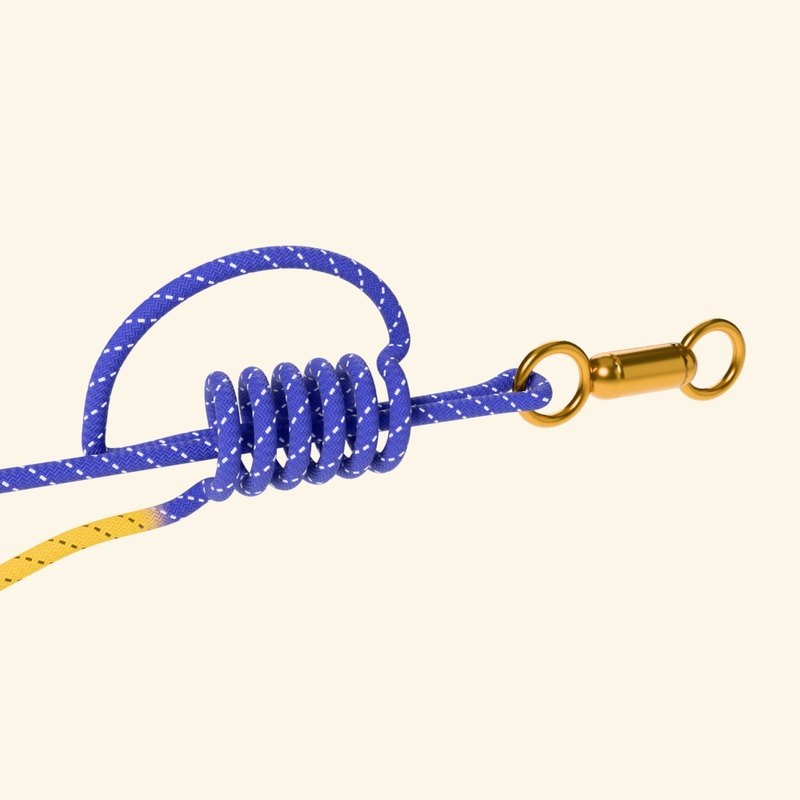 Main lineTag endLoopWraps round both linesSwivel eye
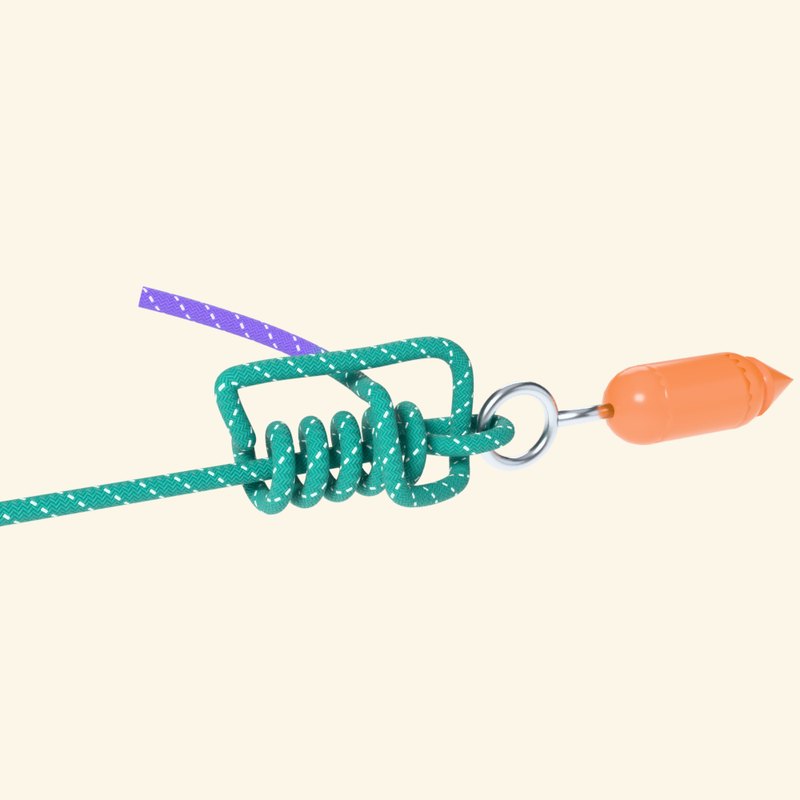 Main lineTag endBig loopThe tuckTurns round the main lineSmall loopSplit ring
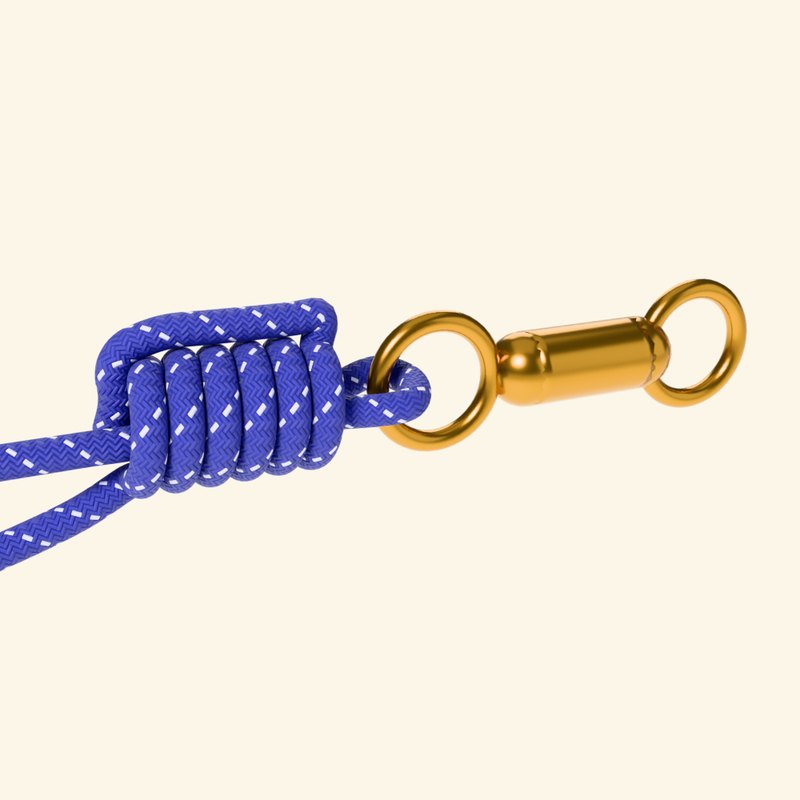 Main lineTag endWrapsSwivel eyeSwivel
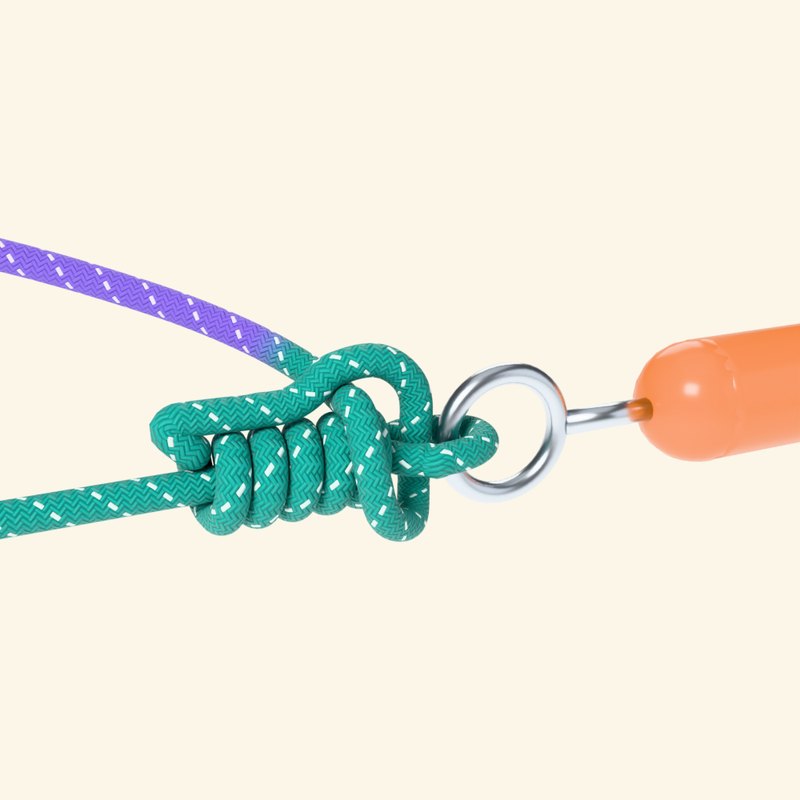 Main lineTag endTurnsThe tuckSmall loopSplit ringLure
Both pairs are shown at the same scale and from the same angle.
Piece 3 · The key difference
Where the wraps go
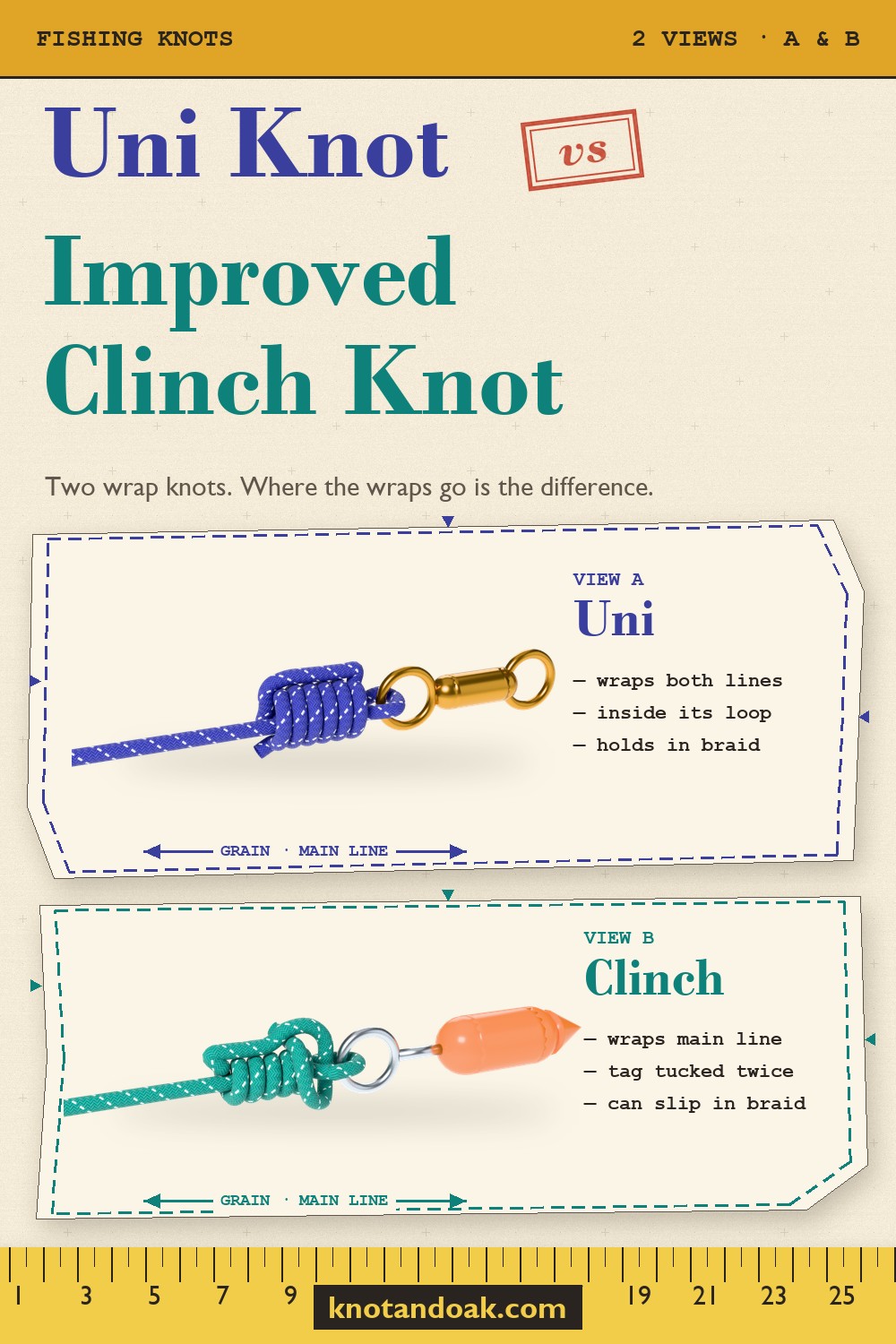
Both are wrap knots, and both hold by friction in their coils. The difference is what the coils grip.
Uni: round two lines, inside a loop
The tag is laid back along the main line, so each wrap squeezes two strands. The loop it wraps inside closes as the tag is pulled, trapping the end, and the whole barrel then slides down to the eye.
Improved clinch: round one line, then tucked
The turns squeeze one strand, the main line. The end is locked by tucks instead: down through the small loop by the eye, then back through the big loop. On slick braid the single-strand coil is what lets it slip.
Watch the wraps go on
Piece 4 · Back of the envelope
Point by point
The mark in the middle of each row points to the knot with the edge; = means they are even.
| View A · Uni | Point | View B · Clinch |
|---|---|---|
| Round both lines (main line and tag), inside the uni's own loop | Where the wraps go= | Round the main line only; the tag is then tucked twice |
| 7, with the trim | StepsB ▶ | 6, with the trim |
| About 85-95% of line strength | Strength in mono and fluorocarbon= | About 85-95% of line strength |
| Good, with 7-10 wraps | Braided line◀ A | Poor: the turns can slip |
| Fine with 3-4 wraps | Heavy line (30 lb and up)◀ A | Turns get bulky and hard to seat |
| One strand through the eye | Small hook eyes and flies= | One strand through the eye |
| Nothing passes through a loop | Big lures, treble hooks= | Nothing passes through a loop |
| One more move: lay the loop | Easy to learnB ▶ | The classic first knot |
| Yes: cinch, then slide down | Slides to adjust before seating◀ A | No: it seats where it is pulled |
| Yes: the uni loop | Leaves a loop for lure action◀ A | No |
| Yes: the double uni | Joins two lines◀ A | No |
| Yes: the usual arbor knot | Ties to the reel spool◀ A | No |
Piece 5 · Instructions
How to tie each knot
Leave about 15 cm (6 in) of tag for either knot, and wet it before the final pull.
Uni knot in 7 steps
- Through the eye Pass about 15 cm (6 in) of line through the eye.
- Double back Lay the end back alongside the main line.
- Make a loop Bring the end up and back over both lines, so it forms a loop.
- Wrap 5 to 7 times Wrap the end round both lines, working inside the loop.
- Wet and cinch Wet it, then pull the tag end first (not the main line yet): the wraps close into a neat barrel, side by side.
- Slide it down Pull the main line until the knot slides snug against the eye.
- Trim Cut the tag, leaving about 3 mm so the end cannot creep back.
Improved clinch in 6 steps
- Through the eye Pass about 15 cm (6 in) of line through the eye.
- Twist 5 to 7 turns Wrap the end round the main line, working away from the eye.
- Through the small loop Bring the end back and pass it through the small loop just above the eye.
- Back through the big loop Now pass it through the big loop you have just made. This tuck is what makes it improved; without it the plain clinch slips more readily.
- Wet and pull tight Wet it, hold the tag, and pull the main line slowly until the turns coil down to the eye side by side, not crossed.
- Trim Cut the tag, leaving about 3 mm so the end cannot creep back.
Stage 1 · Through the eye
Stage 2 · Lock the end
Stage 3 · Seat it
The whole tie at 4x
Piece 6 · Strength and line
Strength, braid, mono and fluorocarbon
How strong?
Knot strength is the share of the line's rated breaking strength that survives the knot. Pull tests by anglers and line makers usually put both a well-tied uni and a well-tied improved clinch at about 85 to 95 percent in mono. The scatter between tests, lines and tiers is larger than the gap between the two.
Braid
Braid is thin, round and slick. The uni holds because each wrap grips two strands and the loop traps the end: give it 7 to 10 wraps. The improved clinch coils round one strand, and under load the turns can slide; many anglers simply do not tie it in braid.
Mono and fluorocarbon
Both knots are at home here. The clinch is a favourite in light mono and on flies; stiff fluorocarbon seats better in either knot with a good wetting and a slow, firm pull.
Wet it, then pull
Wet either knot before the final pull: friction as the coils cinch heats the line and can weaken it. Pull steadily, check that the coils lie side by side, then trim, leaving about 3 mm.
Piece 7 · Yardage chart
Turns by line weight
Thinner line needs more turns to grip; thicker line needs fewer, or the coils will not seat.
| Line | Uni wraps | Clinch turns |
|---|---|---|
| Mono / fluoro up to 12 lb (5 kg) | 6-7 | 7 |
| Mono / fluoro 12-20 lb (5-9 kg) | 5-6 | 6 |
| Mono / fluoro 20-30 lb (9-14 kg) | 4-5 | 5 |
| Mono 30 lb (14 kg) and up | 3-4 | Tie another knot |
| Braid, any weight | 7-10 | Not recommended |
Our pictures show five wraps on each knot, a usual count for medium mono.
Piece 8 · Uni extras
Three more jobs for the uni
Double uni: join two lines
Overlap the lines, tie a uni in each round the other, then pull the two knots together. It joins braid to a mono or fluorocarbon leader. Use 7 to 10 wraps in braid, 5 or 6 in mono.
Uni loop: lure action
Cinch the uni but stop it short of the eye, leaving a small fixed loop. The lure swings free and swims with more action. A hard pull can slide it down to the eye.
Line to the reel spool
Pass the line round the spool, tie a uni round the main line and slide it down: the usual arbor knot for spooling up.
The improved clinch does one job, tying line to an eye, and does it neatly.
Piece 9 · Which one
When to choose which
The rule of thumb: braid, heavy line or any extra job, a uni; mono or fluoro to a hook, lure or fly, either, and the clinch is the classic.
Braided line
Uni
The wraps grip two strands at once. Use 7 to 10 of them. Skip the clinch in braid.
Mono or fluoro to a hook
Either
Both are excellent. Tie the one you can tie best, wet it and seat it fully.
Heavy line, 30 lb and up
Uni
A uni with 3 or 4 wraps seats cleanly; clinch turns get bulky.
A fly to the tippet
Clinch
The improved clinch is the fly angler's standard: small, quick, neat on tiny eyes.
Braid to a leader
Uni
Two uni knots tied round each other make the double uni.
Line onto the reel
Uni
The uni tied round the spool is the usual arbor knot.
A free-swinging lure
Uni
Stop the uni short of the eye: a small loop lets the lure swim.
Swivels, snaps, split rings
Either
Both hold well; the uni can be slid down after it is cinched.
Piece 10 · In 3D
Turn both knots in 3D
One player for each knot. Drag to turn, pinch or scroll to zoom, scrub the timeline to any step, and glow the tag end to follow it through the knot.
Uni knot
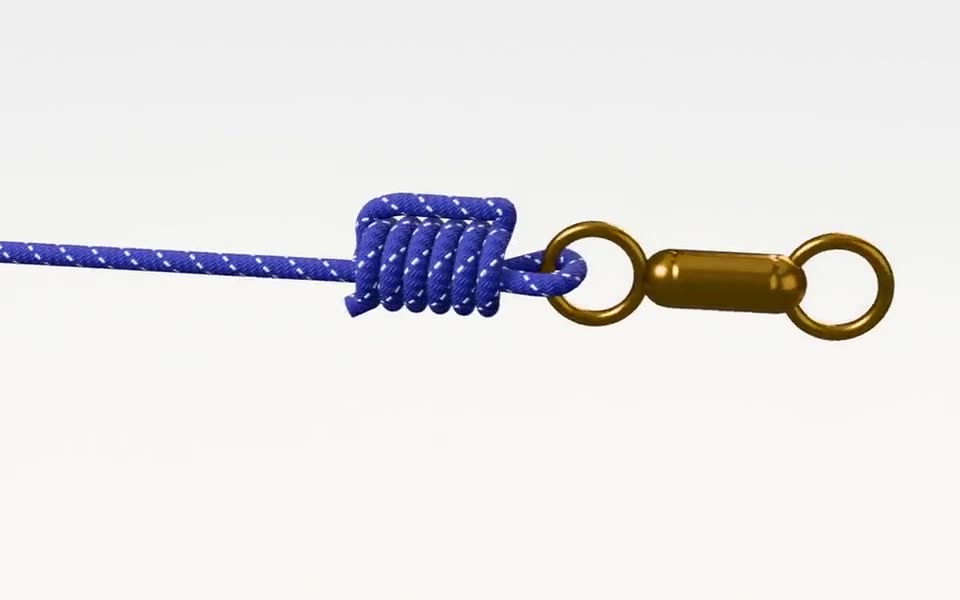
· Drag to turn · pinch to zoom
Improved clinch knot
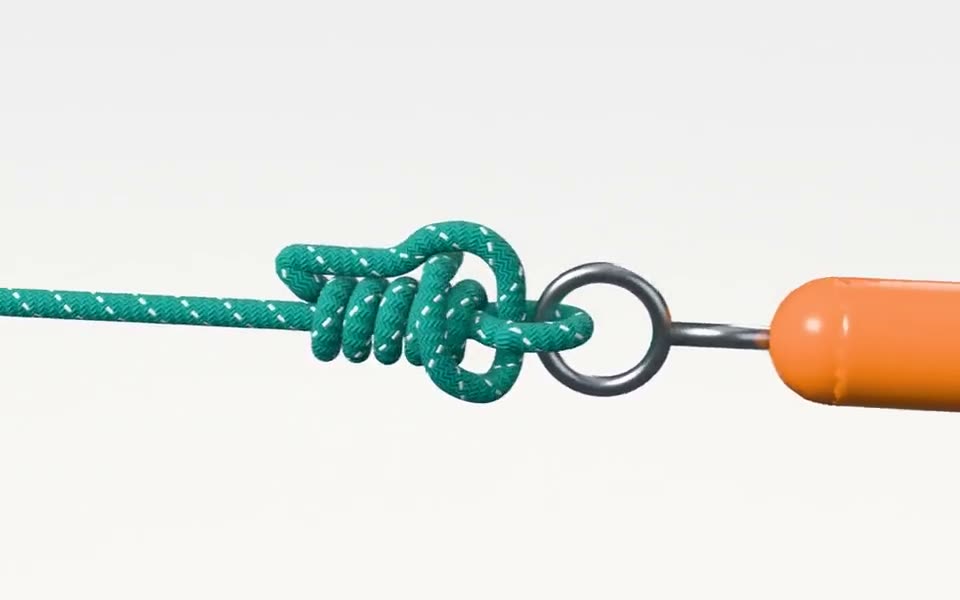
· Drag to turn · pinch to zoom
Piece 11 · Questions
Uni vs improved clinch: questions anglers ask
Which is stronger, the uni knot or the improved clinch knot?
In mono and fluorocarbon they are close. Published pull tests usually put a well-tied uni and a well-tied improved clinch somewhere around 85 to 95 percent of the line's rated strength, and the spread between test runs is bigger than the gap between the two knots. How well the knot is wetted and seated matters more than which one you tie.
Can you tie an improved clinch knot in braided line?
You can, but it is not a good choice. Braid is thin and slick, and the clinch's turns lie round a single strand, so under load they can slide and the knot can slip. In braid, tie a uni with 7 to 10 wraps (or a Palomar) instead.
What is the difference between a clinch knot and an improved clinch knot?
One extra tuck. In both, the tag end twists round the main line and goes through the small loop by the eye. The improved clinch then takes the tag back through the big loop it has just made, which locks the end and stops the knot slipping.
How many turns or wraps should I use?
For the improved clinch: about 7 turns in light line up to 12 lb, 6 in 12 to 20 lb, 5 in 20 to 30 lb; above that, tie something else. For the uni: 5 to 7 wraps in mono and fluorocarbon, 3 or 4 in heavy mono of 30 lb and up, and 7 to 10 in braid.
Why do I have to wet a fishing knot before tightening it?
As a wrap knot cinches, the turns rub on each other and friction heats the line, which can weaken mono and fluorocarbon. Water or saliva lets the turns slide into place and seat neatly. Then pull slowly and steadily.
Can the improved clinch knot join two lines?
No. It only ties line to an eye. The uni does more: two uni knots tied round each other make the double uni line-to-line join, a uni stopped short of the eye makes a loop, and a uni round the spool is the usual arbor knot.
Which knot is easier to learn?
The improved clinch is the knot most anglers learn first: twist, tuck, tuck back, pull. The uni has one more move, laying the loop, but its wraps go round two lines at once, and once learned it covers more jobs.
Piece 12 · Common uses
Common uses
Uni knot
- Hooks, lures and swivels on braid
- Braid to leader (double uni)
- Line onto the reel spool
- A loop for lure action (uni loop)
Improved clinch knot
- Hooks in mono and fluorocarbon
- Flies to the tippet
- Lures, jigs and plugs on mono
- Swivels and snaps
Save the pattern
Keep the uni vs improved clinch card in your tackle notes: both knots, where the wraps go and which line each one likes, on one image.
Pin it