


The short answer
Palomar or uni: which fishing knot?
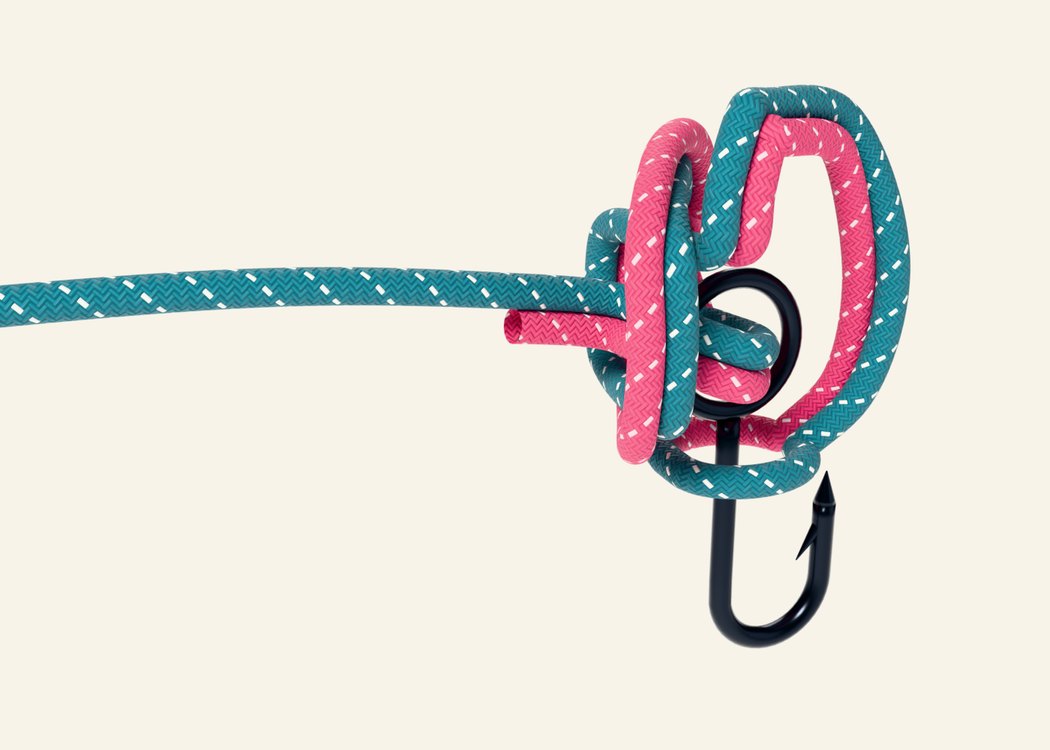
Tie a Palomar
for hooks, jigs, small lures and swivels, especially in braid. It is quick, needs no wraps counted, and is one of the strongest knots there is. Its one catch: the lure has to fit through the loop.
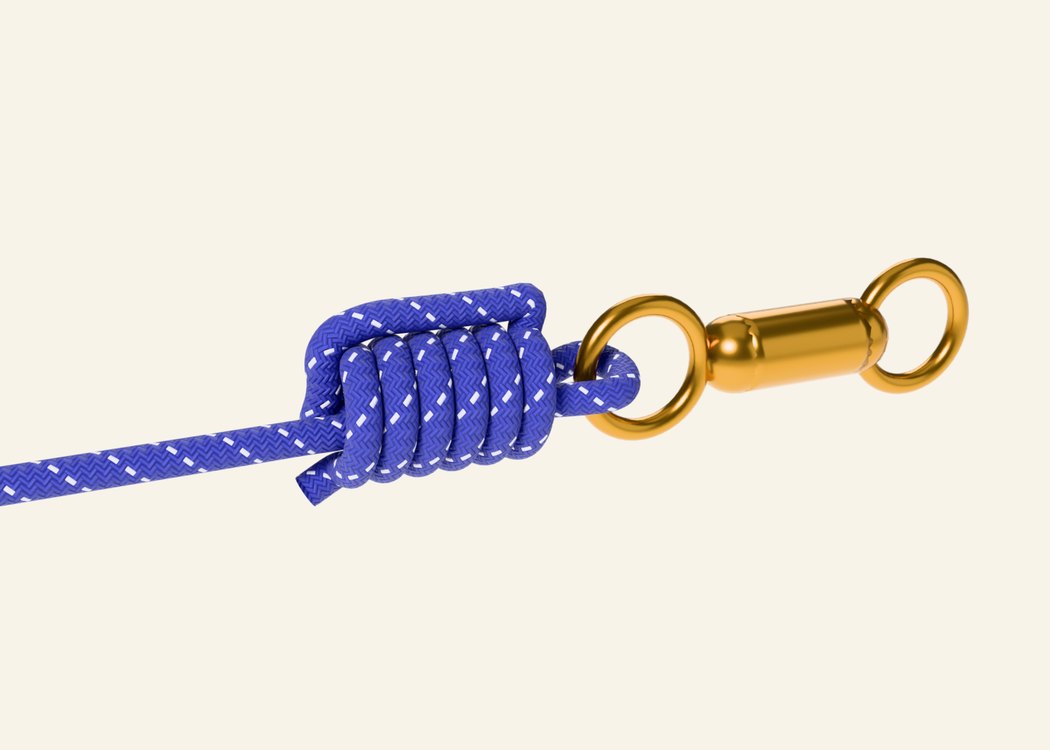
Tie a uni
for big lures, treble hooks and small eyes, and whenever one knot should do everything: it also joins two lines (the double uni), makes a loop for lure action and ties line to the reel spool.
Both hold around 90 percent of the line's strength when tied well. Wet them, pull them fully tight, and either will land fish.
Anatomy
A loop over the hook, or wraps round the line
Both knots start the same way, with about 15 cm (6 in) of line and an eye. Then they part company. The Palomar goes through the eye doubled and grips with an overhand and a loop that the hook passes through. The uni goes through single and grips with a barrel of wraps that slides down to the eye.
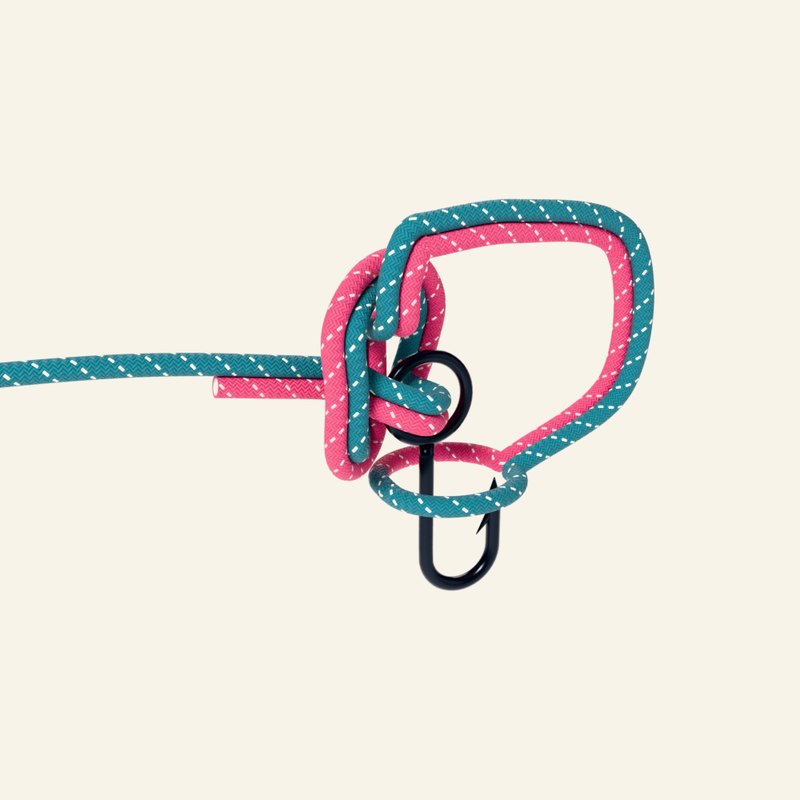 Doubled lineTag endOverhandLoop over the hookHook
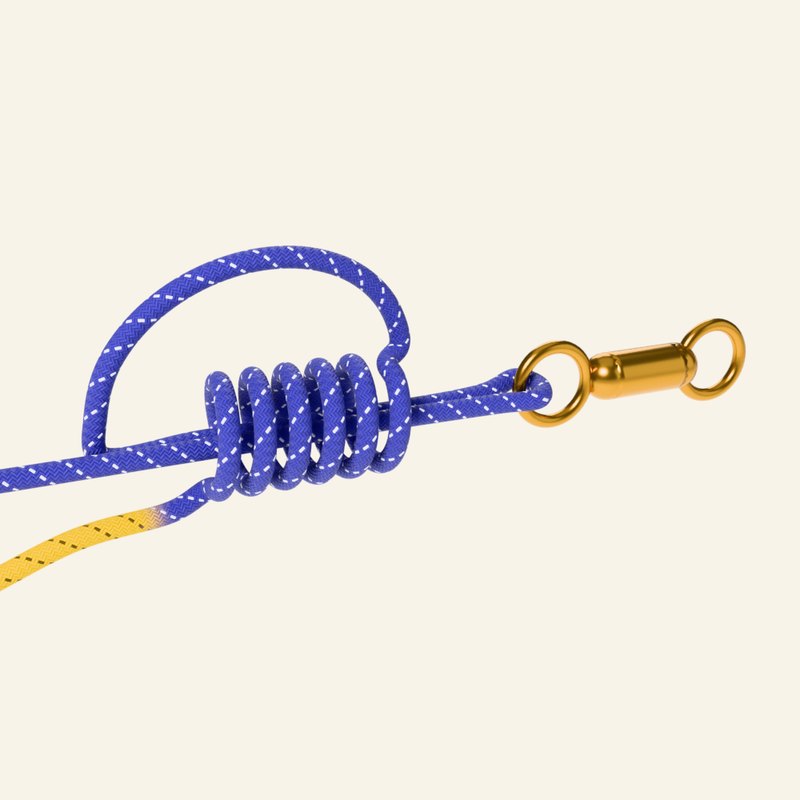 Main lineTag endLoopFive wrapsSwivel eye
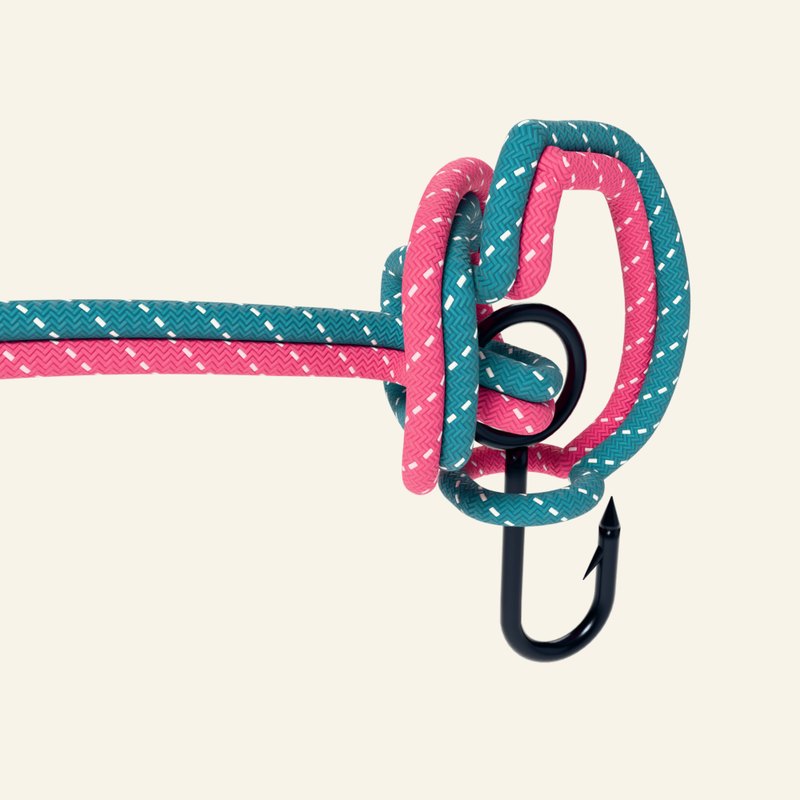 Main lineTag endLoopOverhandHook
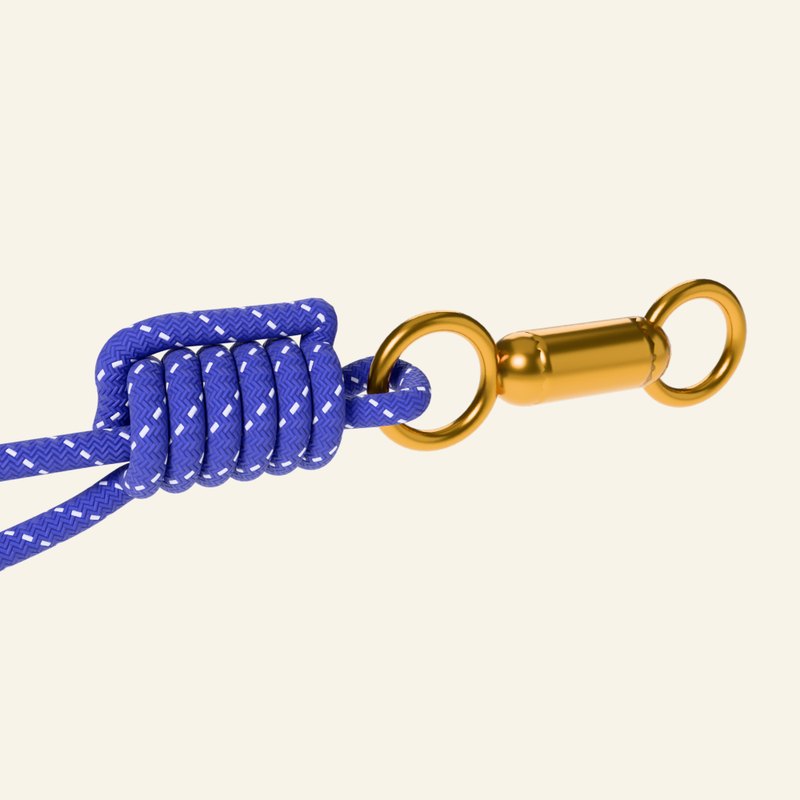 Main lineTag endWrapsSwivel eyeSwivel
Both pairs are shown at the same scale and from the same angle.
Compared
The two knots, point by point
The arrow in the middle of each row points to the knot with the edge; two bars mean it is even.
| Palomar | Point | Uni |
|---|---|---|
| Doubled line through the eye, a loose overhand, then the loop goes over the hook | How it is built | Single line through the eye, doubled back, 5 to 7 wraps round both lines inside a loop, slid down |
| 5, plus the trim | Steps | 6, plus the trim |
| About 90-95% of line strength; often top of braid tests | Strength, well tied | About 85-95%; very consistent |
| Excellent: two strands share the load and grip | Braided line | Good, with 7-10 wraps so it cannot slip |
| Excellent | Mono and fluorocarbon | Excellent, 5-7 wraps (3-4 in heavy line) |
| Awkward: the whole lure must pass through the loop | Big lures, treble hooks | Easy: nothing passes through a loop |
| The line must fit through doubled | Small hook eyes | Only one strand goes through |
| About 15 cm (6 in), doubled, so more line | Line used | About 15 cm (6 in), single |
| Very easy: no wraps to count | Tying by feel (cold, dark) | Fair: count the wraps |
| No | Leaves a loop for lure action | Yes: the uni loop |
| No | Joins two lines | Yes: the double uni |
| No | Ties to the reel spool | Yes: the usual arbor knot |
How to tie
How to tie each knot
Leave yourself about 15 cm (6 in) of line for either knot. The Palomar has fewer moves; the uni has one more, counting the wraps.
Palomar knot in 6 steps
- Double the line Fold about 15 cm (6 in) of line back on itself to make a long bight.
- Through the eye Push the bight through the hook eye, so a loop sticks out the far side.
- Tie a loose overhand With the doubled line, tie a simple overhand knot; let the hook hang in it.
- Hook through the loop Pass the loop right over the hook (or the whole lure).
- Wet and pull tight Wet it, then pull the main line and the tag end together until the loop seats above the eye.
- Trim the tag Cut the tag end, leaving about 3 mm.
Uni knot in 7 steps
- Through the eye Pass about 15 cm (6 in) of line through the eye.
- Double back Lay the end back alongside the main line.
- Make a loop Bring the end up and back over both lines, so it forms a loop.
- Wrap 5 to 7 times Wrap the end round both lines, inside the loop: 5 to 7 times in mono, more in braid.
- Cinch the wraps Wet it and pull the tag end: the wraps close into a neat barrel.
- Slide it down Pull the main line until the knot slides snug against the eye.
- Trim the tag Cut the tag end, leaving about 3 mm.
Move 1 · Set up
Move 2 · The key move
Move 3 · Set it
The whole tie at 4x
For every step at full speed, see our full Palomar knot and uni knot guides.
Strength and line
Strength, braid, mono and fluorocarbon
How strong?
Knot strength is the share of the line's rated breaking strength that survives the knot. Pull tests by anglers and line makers usually put a well-tied Palomar at about 90 to 95 percent, near the top of the table, and a uni at about 85 to 95 percent. Results vary with the line, the hook and the tying, more than between these two knots.
Braid
Braid is thin and slick, so knots can slip. The Palomar handles it best: the line is doubled through the eye, so two strands share the load and lock each other in the overhand. A uni works in braid with more wraps: 7 to 10.
Mono and fluorocarbon
Both knots are excellent. For the uni, 5 to 7 wraps suits most line; in heavy mono (around 30 lb and up) 3 or 4 wraps seat better. Stiff fluorocarbon makes the Palomar's loop harder to pass over the hook.
Wet it, then pull
Before the final pull, wet either knot. Friction as a knot cinches heats mono and fluorocarbon and can weaken it. Pull slowly and steadily on both the main line and the tag until it is fully seated, then trim, leaving about 3 mm.
Uni wraps by line
- 5-7Mono and fluorocarbon
- 3-4Heavy mono, 30 lb and up
- 7-10Braid
Big lures
Big lures and treble hooks
Palomar: everything through the loop
The Palomar's fourth step passes the loop over whatever is tied on. With a hook or a jig that is easy. With a big crankbait, a swimbait or a plug hung with two or three treble hooks it is awkward: the trebles snag the loop, and the doubled line may tangle. You can leave a bigger loop, but it costs line and time.
Uni: nothing passes through
The uni's wraps go round the line, not the lure, so the size of the lure makes no difference. That is why many anglers tie the uni for hard baits, and keep the Palomar for hooks, jigs and soft plastics.
Uni extras
One knot, three more jobs: the uni's other uses
Double uni: join two lines
Overlap the two lines, tie a uni in each round the other, then pull the knots together. It joins braid to a mono or fluorocarbon leader, or mends a broken line. Use 7 to 10 wraps in braid, 5 or 6 in mono.
Uni loop: lure action
Tie the uni but stop it short of the eye, leaving a small loop. A lure swings free in the loop and swims with more action. A hard pull from a fish can slide it down to the eye.
Line to the reel spool
Pass the line round the spool, tie a uni round the main line and slide it down: the usual arbor knot for spooling up.
The Palomar does one job, tying line to an eye, and does it very well.
Which one
When to choose which
The rule of thumb: if it fits through the loop, a Palomar; if it does not, or the job is not a hook, a uni.
Drop-shot rig
Palomar
Tie a Palomar with a long tag: the hook stands out from the line and the tag carries the weight.
Braid to a hook or jig
Palomar
The doubled line grips slick braid and is one of the strongest choices.
Retying by feel
Palomar
Cold hands, poor light, a rocking boat: five steps and no wraps to count.
Big lures and treble hooks
Uni
Crankbaits, swimbaits and topwater plugs never have to pass through a loop.
Braid to a leader
Uni
Two uni knots tied round each other make the double uni line-to-line join.
Line onto the reel
Uni
The uni is the usual knot for tying the line to the reel's spool.
A free-swinging lure
Uni
Stop the uni short of the eye for a small loop that lets the lure swim.
Swivels and snaps
Either
Both hold well: the uni is quicker on small eyes, the Palomar in braid.
In 3D
Turn both knots in 3D
One player for each knot. Drag to turn, pinch or scroll to zoom, scrub the timeline to any step, and glow the tag end to follow it through the knot.
Palomar knot
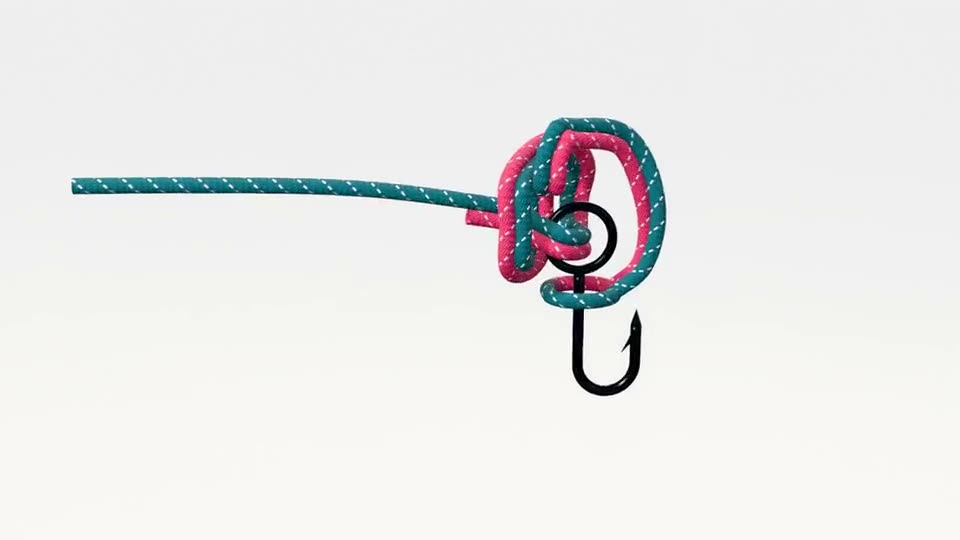
· Drag to turn · pinch to zoom
Uni knot
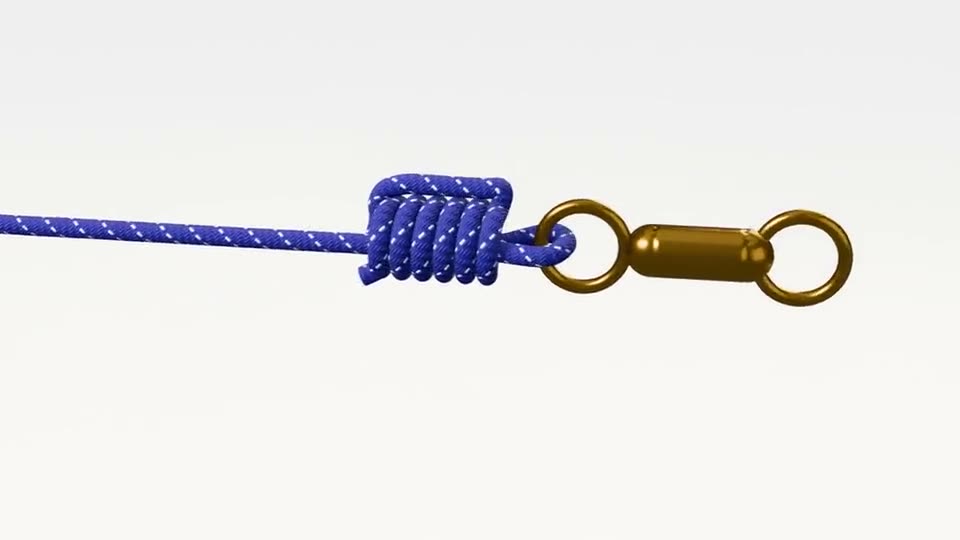
· Drag to turn · pinch to zoom
Questions
Palomar vs uni: questions anglers ask
Which is stronger, the Palomar knot or the uni knot?
Both are strong knots. In published pull tests a well-tied Palomar usually holds around 90 to 95 percent of the line's rated strength and often tops tests with braided line; a well-tied uni usually lands in the 85 to 95 percent range. The difference between them is smaller than the difference a poorly seated knot makes, so tie either one carefully, wet it and pull it fully tight.
Which knot is better for braided line?
The Palomar is the usual first choice for braid. The line goes through the eye doubled, so two strands share the load and grip each other, and braid's slipperiness matters less. A uni works in braid too, but give it more wraps, 7 to 10, so it cannot slip.
Can you tie a Palomar knot on a big lure or a lure with treble hooks?
You can, but it is awkward: the whole lure has to pass through the loop of doubled line, and treble hooks catch on it. Leave a bigger loop, or switch to a uni knot (or an improved clinch), which never passes anything through a loop.
How many wraps should a uni knot have?
Five to seven for mono and fluorocarbon in light to medium line, three or four in heavy mono (around 30 lb and up, where the wraps get bulky), and 7 to 10 in braid. Our pictures show five, the usual count for mono.
Should I wet a fishing knot before pulling it tight?
Yes. Wet both knots with water or saliva before the final pull. Friction heats mono and fluorocarbon as the knot cinches and can weaken it; a wet knot also seats more neatly. Pull steadily, not with a jerk.
Can the uni knot join two fishing lines?
Yes. Tie a uni knot in each line round the other, then pull the two knots together: this is the double uni, or uni-to-uni, a favourite for joining braid to a mono or fluorocarbon leader (use more wraps in the braid). The Palomar cannot join lines.
What is a uni loop knot?
A uni knot tied but not slid all the way to the eye, so it leaves a small fixed loop. A lure hangs free in the loop and swims with more action. When a fish pulls hard the knot can slide down to the eye.
Common uses
Common uses
Palomar knot
- Hooks, in braid, mono or fluorocarbon
- Drop-shot rigs (hook on a long tag)
- Swivels, snaps and split rings
- Jigs and soft plastics on braid
Uni knot
- Crankbaits, swimbaits and treble-hook plugs
- Braid to leader (double uni)
- Line onto the reel spool
- A loop for lure action (uni loop)
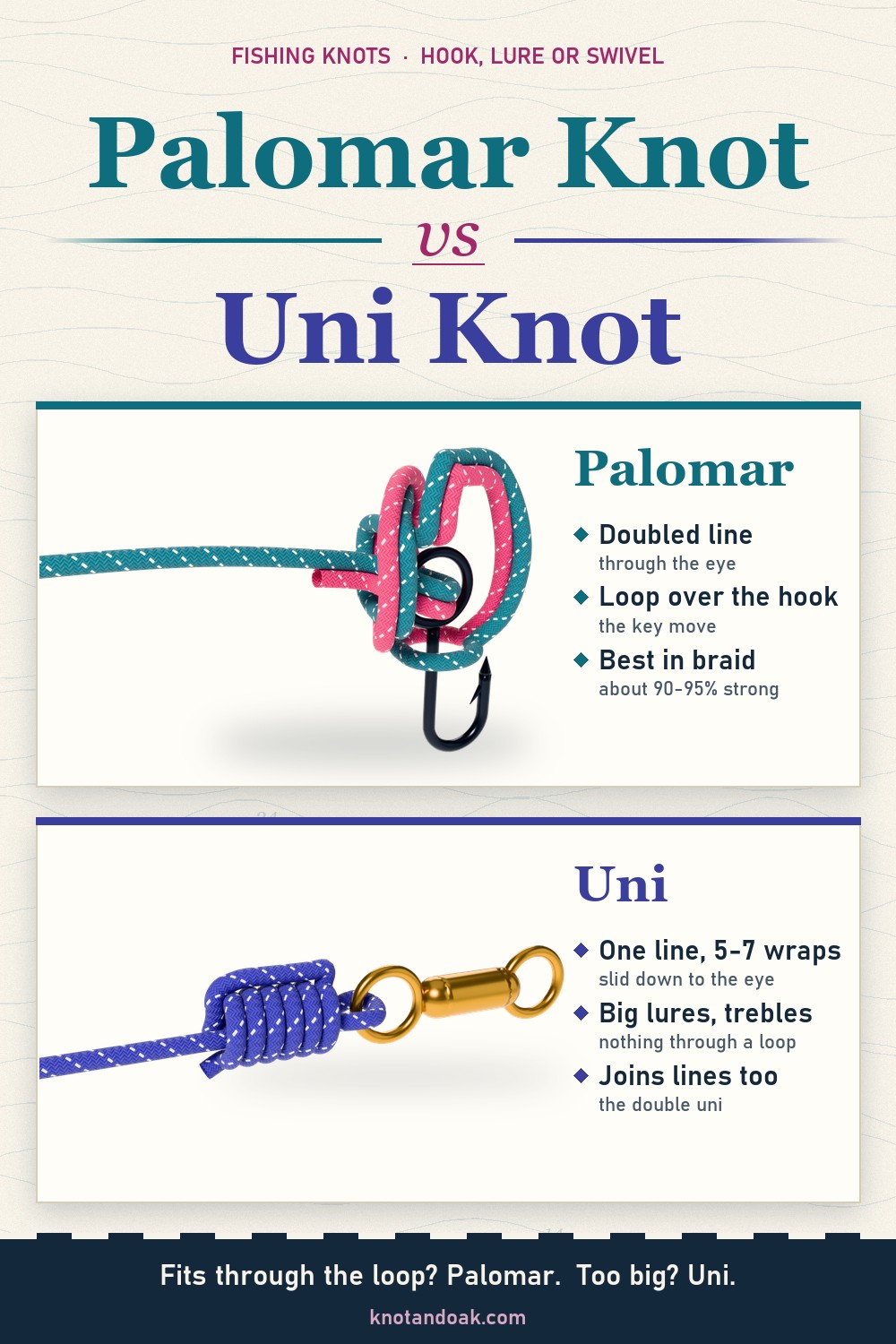
Save the comparison
Keep the Palomar vs uni card in your tackle notes: the two knots, the key move of each and when to tie which, on one image.
Pin it