


PG 01/10The short answer
Palomar or improved clinch: which should you tie?
Tie a Palomar
for hooks, jigs, drop-shots and swivels, and always in braid. It is one of the strongest knots there is, has nothing to count and is easy by feel. Its one catch: whatever you tie on has to fit through the loop.
Tie an improved clinch
for lures with treble hooks, flies and small eyes in mono or fluorocarbon. Only one strand goes through the eye and nothing passes through a loop, so the size of the lure never matters. Avoid it in braid, where it can slip.
In mono both hold about 90 percent of the line's strength when tied well. Wet them, pull them fully tight, and either will land fish.
PG 02/10Anatomy
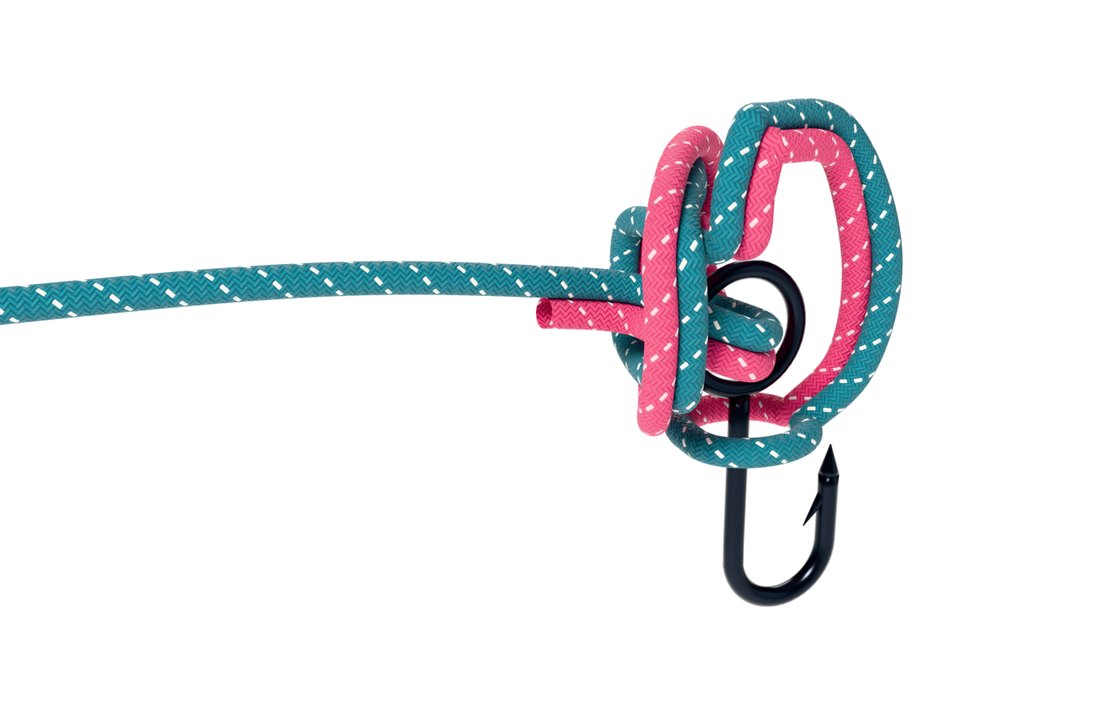
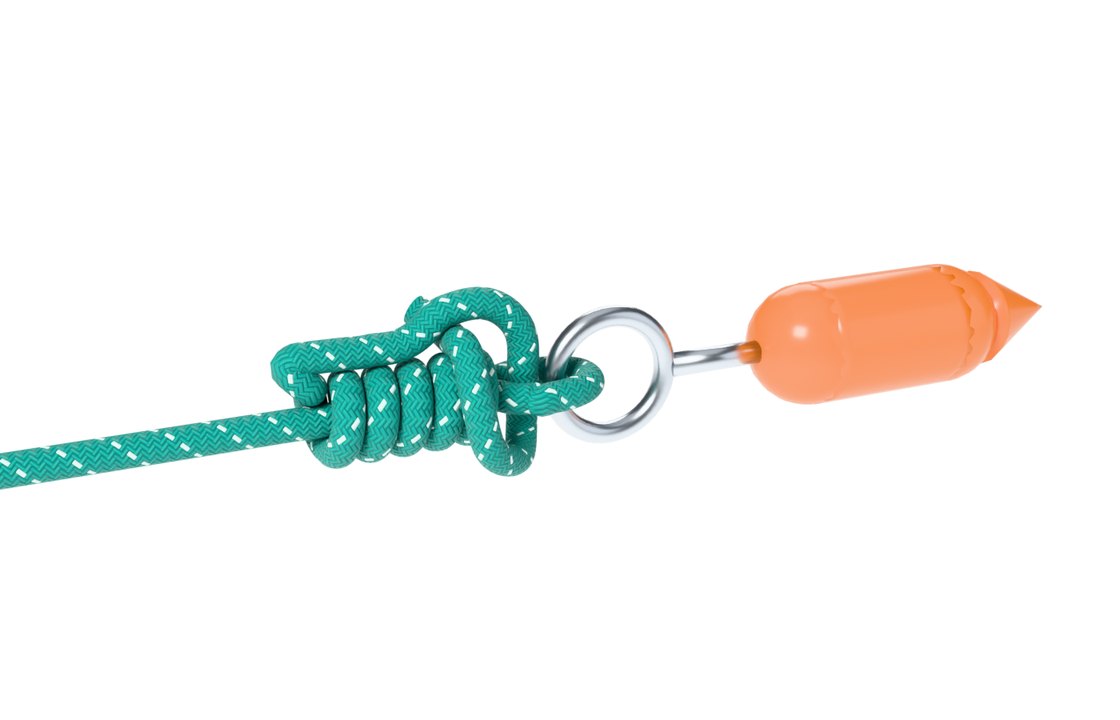
A loop over the hook, or coils round the line
Both start with a tag of line through an eye, then part company. The Palomar goes through doubled and grips with an overhand plus a loop that the hook passes through. The improved clinch goes through single, coils round its own main line, and locks the tag with two tucks: through the small loop by the eye, then back through the big loop.
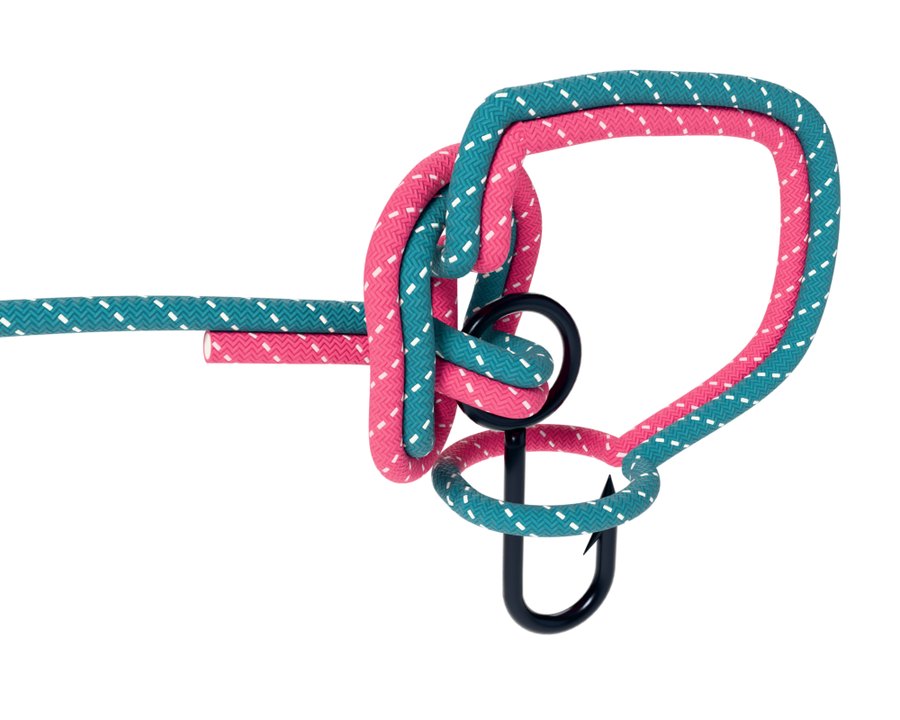 Main lineTag endLoose overhandLoop over the hookHook
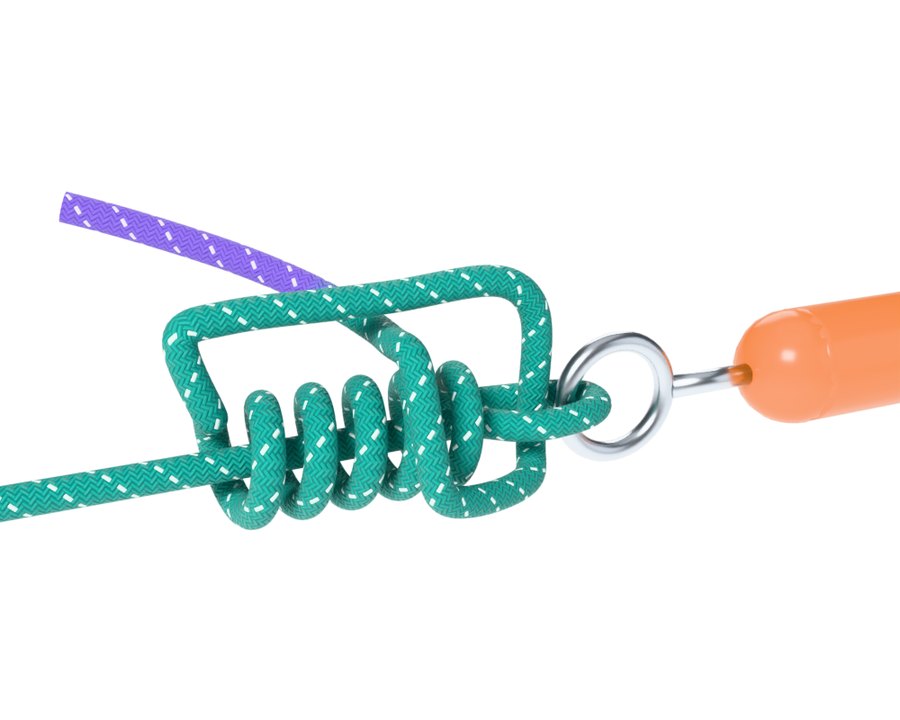 Main lineTag endFive turnsSmall loopBig loopThe tuckSplit ring
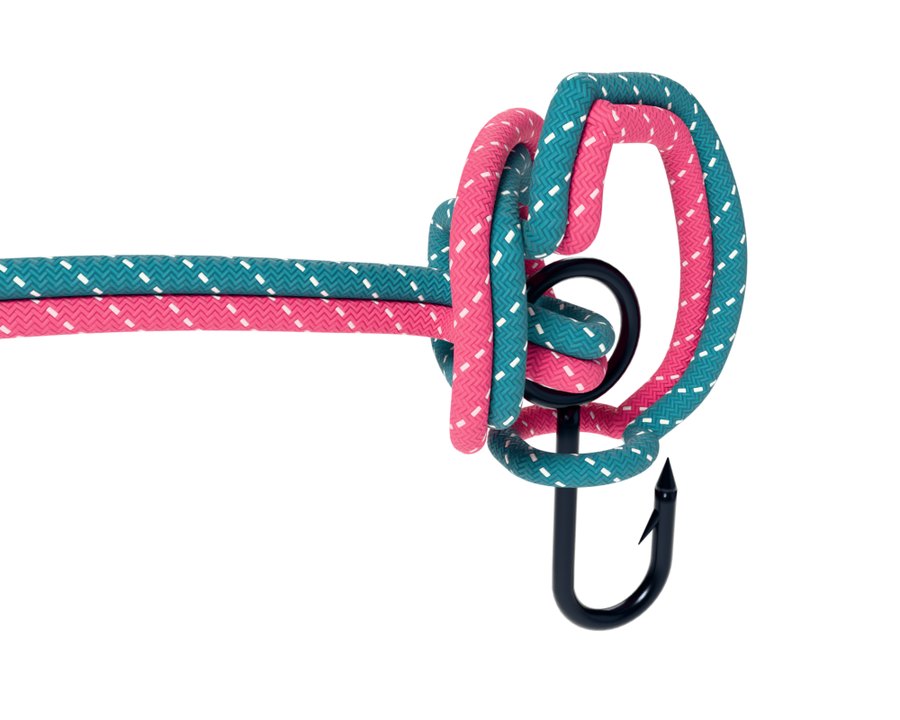 Main lineTag endLoopOverhandHook
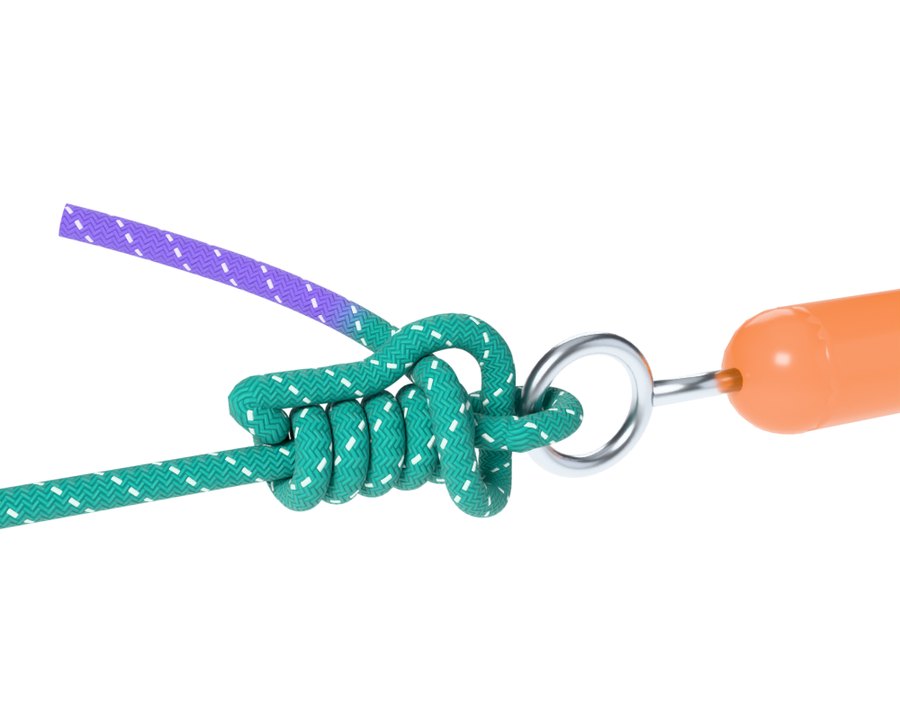 Main lineTag endCoilsSmall loopThe tuckSplit ringLure
Both pairs are shown at the same scale, from the same angle and in the same light.
PG 03/10Compared
Point by point
Every point, side by side. The lit readout on the right of each row shows which knot has the edge.
| Point | Palomar | Improved clinch | Edge |
|---|---|---|---|
| How it grips | Doubled line through the eye, an overhand, and the loop passed over the hook | Single line through the eye, 5-7 turns round the main line, the tag tucked twice | Even |
| Moves | 5, plus the trim | 5, plus the trim and counting the turns | Edge: Palomar |
| Strength, well tied | About 90-95% of line strength | About 85-95% in mono and fluorocarbon | Edge: Palomar |
| Braided line | Excellent: two strands grip each other | Poor: the coils can slip | Edge: Palomar |
| Mono and fluorocarbon | Excellent | Excellent: this is its home ground | Even |
| Big lures, treble hooks | Awkward: the lure must pass through the loop | Easy: nothing passes through a loop | Edge: Clinch |
| Small hook eyes, flies | The line must fit through doubled | Only one strand goes through | Edge: Clinch |
| Line used | About 20 cm (8 in), doubled | About 15 cm (6 in), single | Edge: Clinch |
| Heavy line, 30 lb and up | Fine, if the loop still passes the hook | Coils seat badly: 4 turns or another knot | Edge: Palomar |
| Tying by feel (cold, dark) | Very easy: nothing to count | Fair: count turns, find two loops | Edge: Palomar |
| Finished shape | A compact knot on the eye; tag stands off | A slim barrel in line with the line | Edge: Clinch |
PG 04/10How to tie
How to tie each knot
Both take six steps, trim included. The Palomar needs a little more line because it goes through doubled; the clinch asks you to count the turns.
Palomar knot in 6 steps
- Double the line Fold about 20 cm (8 in) of line back on itself to make a long bight.
- Through the eye Push the bight through the hook eye, so a loop sticks out the far side.
- Tie a loose overhand With the doubled line, tie a simple overhand knot; let the hook hang in it.
- Hook through the loop Pass the loop right over the hook (or the whole lure).
- Wet and pull tight Wet it, then pull the main line and the tag end together until the loop seats above the eye.
- Trim the tag Cut the tag end, leaving about 3 mm.
Improved clinch knot in 6 steps
- Through the eye Pass about 15 cm (6 in) of line through the eye of the hook, lure or swivel.
- Make 5 to 7 turns Wrap the tag end round the main line, away from the eye: 7 in light line, 5 in heavy.
- Through the small loop Bring the tag back and pass it through the small loop just above the eye.
- Back through the big loop Now pass it back through the big loop you just made: the tuck that makes it improved.
- Wet and pull tight Wet it, hold the tag and pull the main line: the turns coil down tight against the eye.
- Trim the tag Cut the tag end, leaving about 3 mm.
Move 1 Set up
Move 2 The key move
Move 3 Set it
Whole tie Start to finish at 4x
For every step at full speed, see our full Palomar knot and improved clinch knot guides.
PG 05/10Strength and line
Strength, braid, mono and fluorocarbon
Knot strength is the share of the line's rated breaking strength that survives the knot. The gauge shows the range anglers' and line makers' pull tests usually report for a well-tied knot; your own tying moves the needle more than the choice of knot does.
Mono and fluorocarbon
Braid
Why the Palomar wins in braid
Braid is thin, hard and slick. The Palomar puts two strands through the eye, so they share the load and lock each other in the overhand. The improved clinch relies on friction between coils of a single strand, and braid's coils can creep and let go. For braid, tie a Palomar, or add a mono or fluorocarbon leader and tie the clinch on that.
Why anglers still love the clinch
In mono and fluorocarbon the improved clinch is a classic for good reason: it uses less line, needs only one strand through the eye, and finishes as a slim barrel that runs straight off the eye. Tied carefully, it is close to the Palomar in strength.
Improved clinch: turns by line weight
| Line | Turns |
|---|---|
| Up to 12 lb (5 kg) | 7 |
| 14-20 lb (6-9 kg) | 6 |
| 25-30 lb (11-14 kg) | 5 |
| Heavier | 4 or another knot |
More turns grip thin line; fewer turns let thick line coil down neatly. The Palomar has no turns to count, whatever the line.
PG 06/10At the water
Big lures and tying speed
Big lures: the Palomar's one weakness
The Palomar's fourth step passes the loop over whatever is tied on. With a hook, a jig or a small soft plastic that is easy. With a big crankbait, a swimbait or a plug hung with treble hooks it is awkward: the trebles snag the loop and the doubled line tangles. You can leave a much bigger loop, but it costs line and time.
Big lures: no problem for the clinch
The improved clinch never passes anything through a loop: the tag does all the travelling. A lure of any size, a fly or a swivel with a snap all take the same knot, which is why many anglers tie the clinch on hard baits and keep the Palomar for hooks and jigs.
On the clock
- PalomarFold, push through, overhand, loop over, pull. Nothing to count, so it is the quicker knot for most people and the easiest by feel.
- Improved clinchThrough, 5-7 turns, two tucks, pull. A few seconds slower while you count turns and find the two loops, but quick once learned.
PG 07/10Which one
When to choose which
The rule of thumb: if it fits through the loop, or the line is braid, a Palomar; if it is a big lure, a fly or a tiny eye in mono, an improved clinch.
Braid to a hook or jig
Palomar
The doubled line grips slick braid; the clinch can slip in it.
Drop-shot rig
Palomar
Tie a Palomar with a long tag: the hook stands out and the tag carries the weight.
Retying by feel
Palomar
Cold hands, poor light, a rocking boat: no turns to count, one tuck.
Big lures and trebles
Clinch
Crankbaits and plugs never have to pass through a loop.
A fly to the tippet
Clinch
One strand fits a small fly eye and tippet stays slim: a fly-fishing classic.
Mono and fluorocarbon
Clinch
Light to medium mono is where the clinch is quickest and neatest.
Swivels and snaps
Either
Both hold well: the Palomar in braid, the clinch in mono.
Very small eyes
Clinch
If the doubled line will not fit through the eye, it has to be the clinch.
PG 08/10In 3D
Turn both knots in 3D
One player for each knot. Drag to turn, pinch or scroll to zoom, scrub the timeline to any step, and glow the tag end to follow it through the knot.
Palomar knot
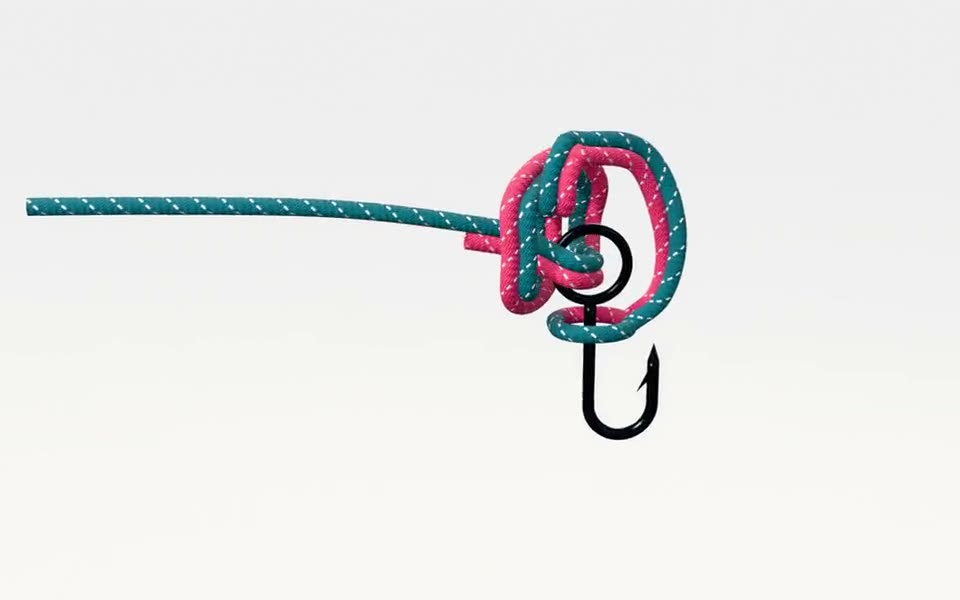
· Drag to turn · pinch to zoom
Improved clinch knot
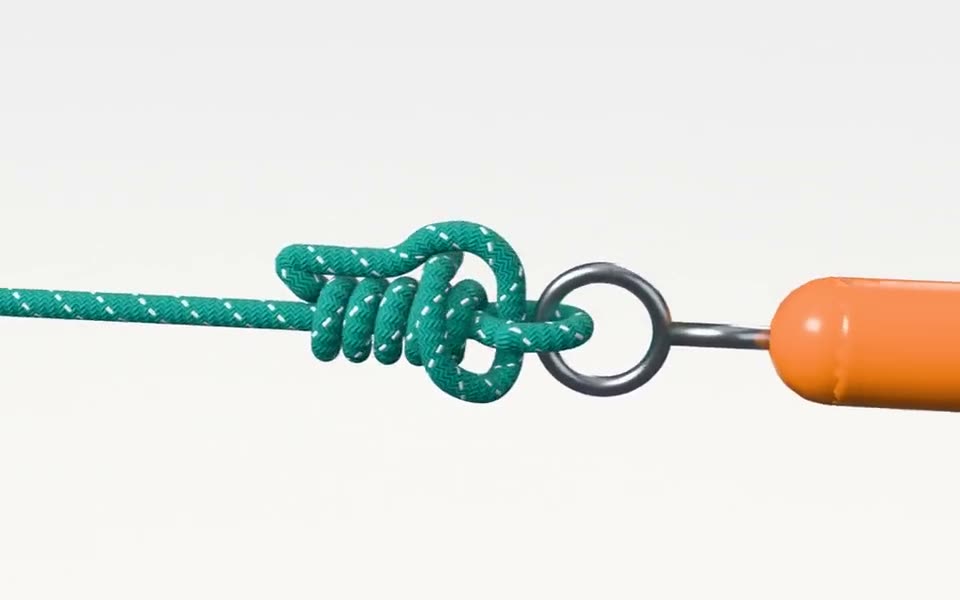
· Drag to turn · pinch to zoom
PG 09/10Questions
Palomar vs improved clinch: questions anglers ask
Which is stronger, the Palomar knot or the improved clinch knot?
In most published pull tests the Palomar comes out a little ahead: a well-tied Palomar usually keeps about 90 to 95 percent of the line's rated strength, and a well-tied improved clinch about 85 to 95 percent in monofilament and fluorocarbon. In braided line the gap is much bigger, because the clinch can slip. In mono, a carefully seated clinch is plenty strong; a badly seated knot of either kind loses far more than the difference between them.
Is the improved clinch knot good for braided line?
Not really. Braid is thin and slick, and the clinch's coils can slide and let go under load. Tie a Palomar in braid, or tie a short mono or fluorocarbon leader to the braid and use the improved clinch on the leader.
Why is it called the improved clinch knot?
The plain clinch knot stops after the tag goes through the small loop by the eye. The improved clinch adds one more move: the tag goes back through the big loop it has just made. That second tuck locks the tag under the coils, so the knot is much less likely to slip.
How many turns should an improved clinch knot have?
Use more turns in light line and fewer in heavy line: about 7 turns up to 12 lb (5 kg), 6 for 14 to 20 lb, and 5 for 25 to 30 lb. In heavier line the coils will not seat neatly; use 4 turns or another knot. Our pictures show 5 turns.
Can you tie a Palomar knot on a big lure with treble hooks?
You can, but it is awkward: the whole lure has to pass through the loop of doubled line, and treble hooks catch in it. Leave a much bigger loop, or tie an improved clinch instead, which never passes anything through a loop.
Which knot is quicker to tie?
The Palomar, for most people. It has no turns to count and only one tuck, so it is easy by feel in cold hands or poor light. The improved clinch is still quick once learned, but you count the turns and find two loops.
Should I wet a fishing knot before pulling it tight?
Yes, both. Friction heats mono and fluorocarbon as a knot cinches and can weaken it. Wet the knot with water or saliva, then pull slowly and steadily until it is fully seated, and trim the tag leaving about 3 mm.
PG 10/10Common uses
Common uses
Palomar knot
- Hooks and jigs on braided line
- Drop-shot rigs (hook on a long tag)
- Hooks for soft plastics and bait
- Swivels, snaps and split rings
Improved clinch knot
- Crankbaits, plugs and treble-hook lures
- Flies to the tippet
- Hooks and swivels on mono or fluorocarbon
- Snaps and lure clips
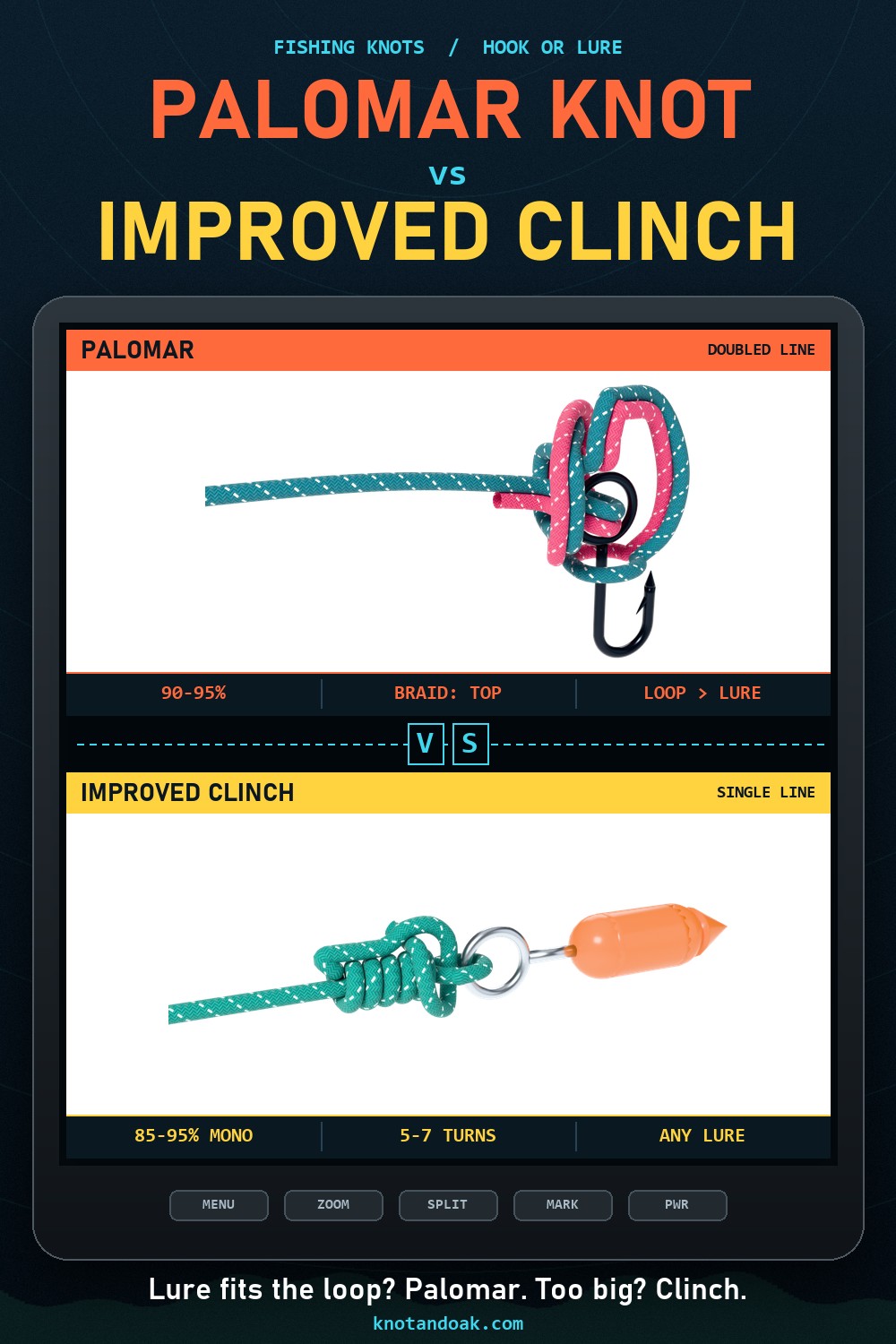
Save the comparison
Keep the Palomar vs improved clinch card in your tackle notes: both knots, the key facts of each and the rule of thumb, on one image.
Pin it