


A knot register · Entry No. 514 in Ashley’s book
How to tie anOverhand Knot
The simplest knot there is, and the first one most of us ever tie. A loop, the end through it, pull: a small stopper that keeps a rope from running out, and the knot that starts dozens of others.
- KindStopper
- Steps4
- Also calledThumb knot
- UntiesHard, once loaded
Plate I · the founder
Portrait of an overhand knot
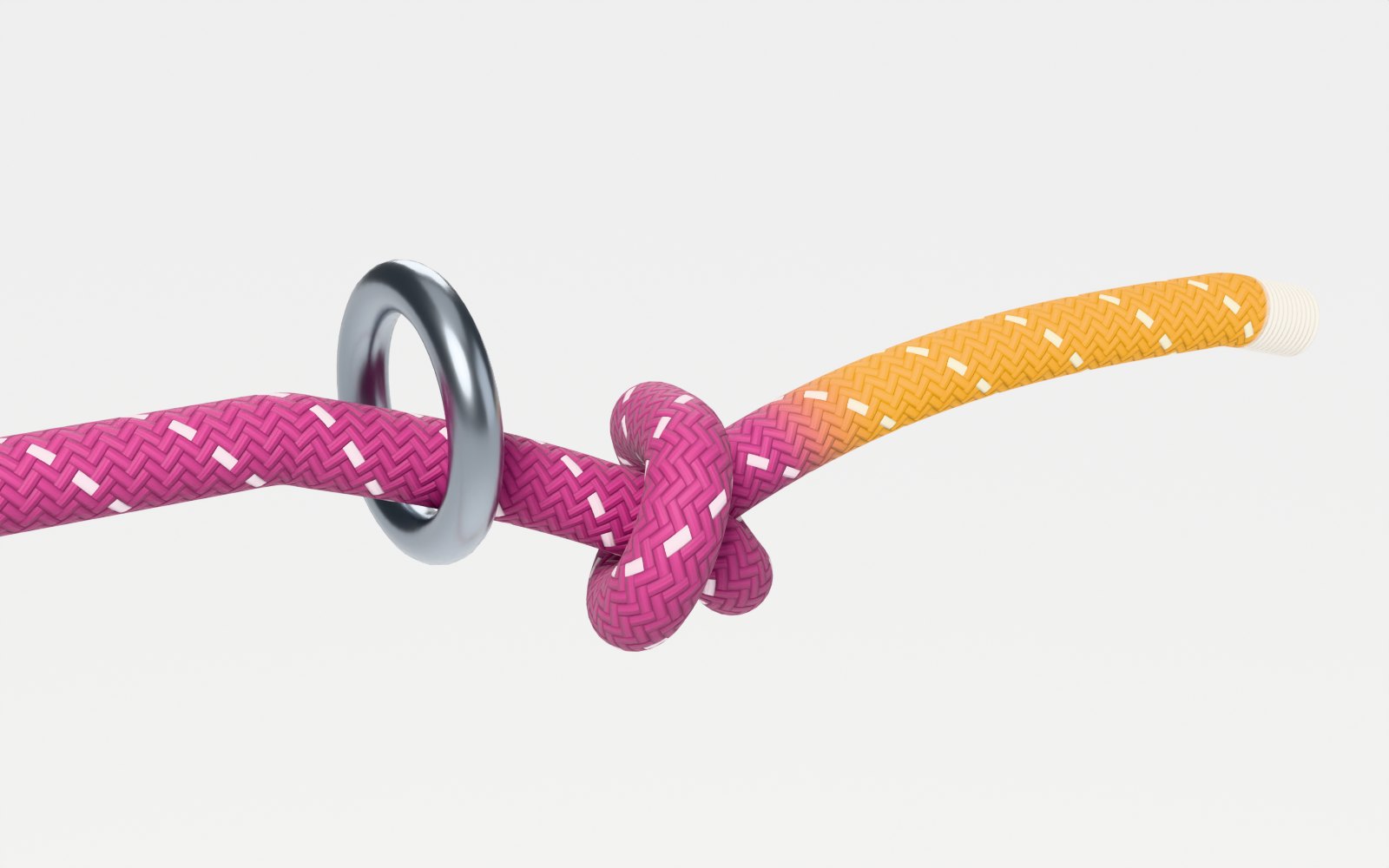 Standing partRingOverhand knotTail
Plate I · tied in the end of the rope, pulled tight and stopped at a ring
The whole knot · 7 s
Start to finish at 4×
A loop, the end through it, pull it tight - and the knot stops the rope at the ring.
- Make a loop
- Through the loop
- Pull it tight
- It stops the rope
Before you start
Two ends of one rope
The overhand is tied with the working end round the standing part of the same rope. Here the rope runs through a ring: the thing the knot will stop at.
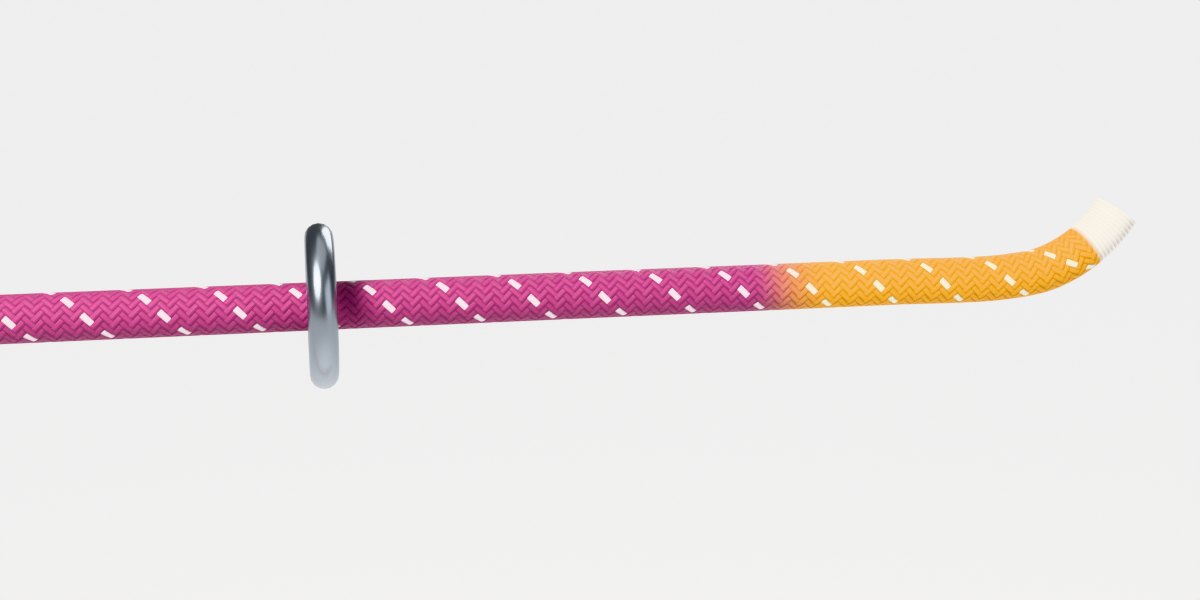 Standing partWorking endRing
- Standing part
The long, main part of the rope: the part that takes the pull.
- Working end
The end you tie with, marked saffron here so you can follow it.
- Ring
Anything the rope runs through: a ring, an eyelet, a pulley, a bead.
Step by step · each clip loops
Four entries in the register
-
IEntry 1 · 6.5 s
Make a loop
Bring the working end up and round in a loop, then cross it over the front of the standing part.
NoteKnot-tyers call this a crossing turn. Leave yourself a hand’s length of end to work with.
-
IIEntry 2 · 7 s
Through the loop
Take the end round behind the side of the loop, up through the loop from behind, and out over the front.
NoteEvery strand now goes over, under, over: three crossings in a little ring - a trefoil.
-
IIIEntry 3 · 6.5 s
Pull it tight
Pull the standing part and the end apart until the loop closes into a small, firm knot.
NoteSnug it slowly so the crossings bed down evenly, then give it a firm tug.
-
IVEntry 4 · 6 s
It stops the rope
Pull the standing part back through the ring. The knot is too bulky to pass and stops at it.
NoteUnder a hard pull it jams: an overhand that has taken a load can be very hard to pick open.
So ends the entry: an overhand in the end of the rope, stopped at the ring.
Before you trust it
Witnessed and signed
Why it works
A small lump where the rope ends
Tied loose, the overhand is just a loop with the end through it. Pulled tight, its three crossings squeeze into a lump about three rope-widths across: too fat for an opening sized for the rope, so the rope stops there.
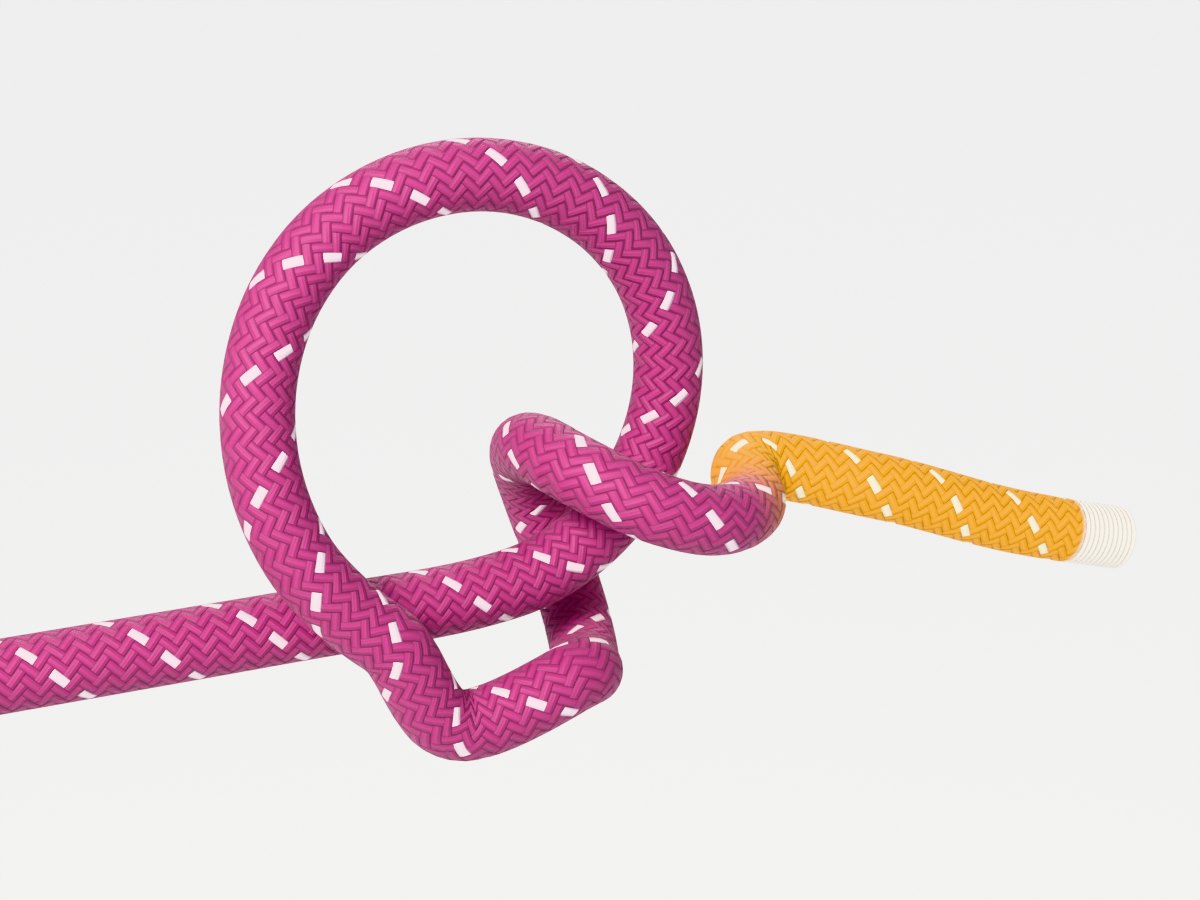
Plate II · loose, as tied
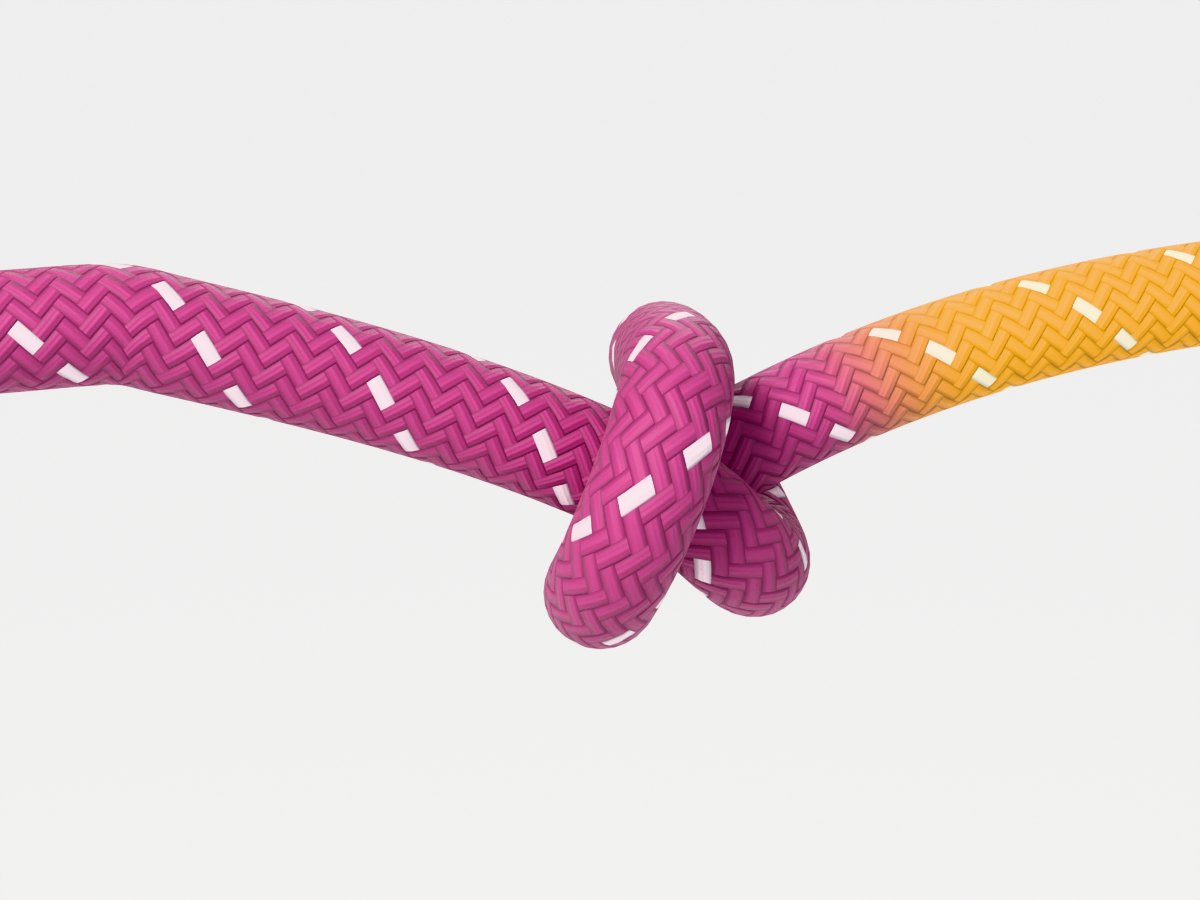
Plate III · pulled tight
It jams. The overhand grips itself so hard that, after it has taken a real load (or got wet), it can be very hard to untie - sometimes you end up cutting it off. That is fine in thread, string and fishing line; in a good rope you may prefer a knot that lets go.
| Overhand | Figure 8 | Double overhand | |
|---|---|---|---|
| Size | Smallest | Bigger | Biggest, a round barrel |
| After a hard pull | Jams; hard to untie | Easier to untie | Jams hard |
| Tying | One pass through the loop | One extra turn round the back | Two passes through the loop |
| Best for | Thread, cord, quick stops | Rope ends, sailing, climbing | A bigger stop, wide holes |
The figure 8 knot (it has its own page in this series) adds one turn round the standing part before the end goes through. That makes a bulkier stopper that is much kinder to untie, which is why sailors and climbers usually reach for it in rope.
The pedigree
The founder and its three children
Change one thing about the overhand and you get a new knot with a new job. Each of these is the same loop-and-tuck, tied a little differently.
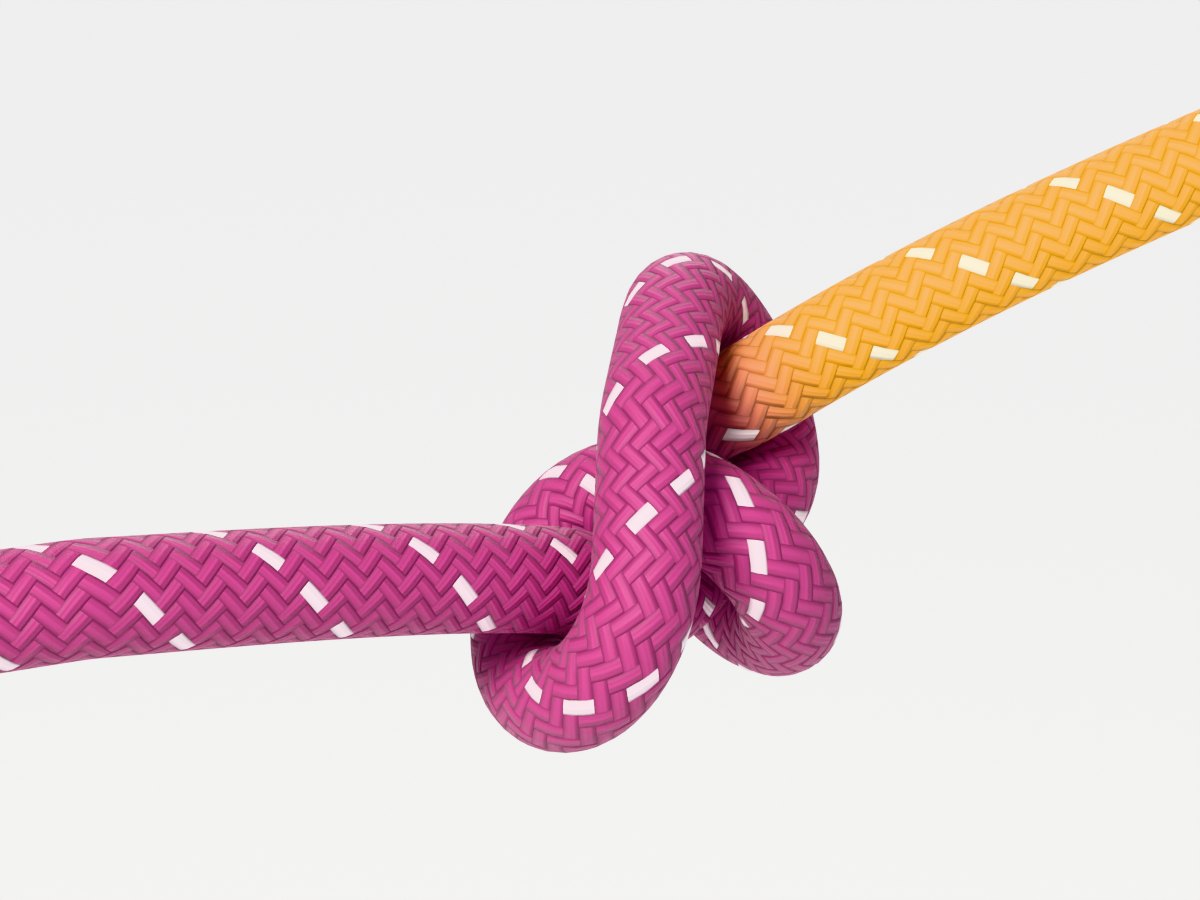
The overhand knot
One loop, one pass through it.
Child · bigger stopper
Double overhand
Make the loop, then pass the end through it twice before you pull. The extra wrap rolls up into a round barrel - a bulkier stopper for a bigger hole, and the start of the blood knot family.
Watch it tied
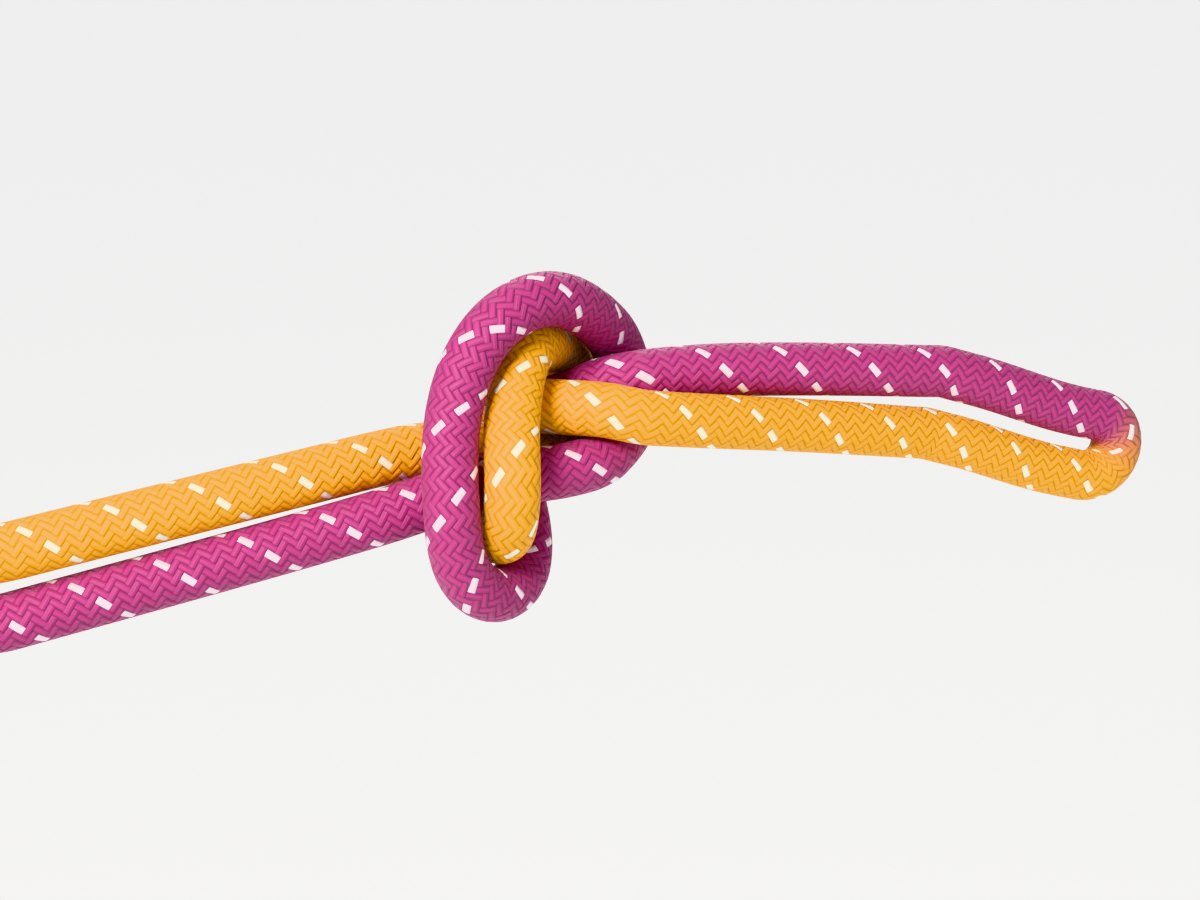 Fixed loopDoubled line
Child · a fixed loop
Overhand loop
Double the end into a bight and tie an ordinary overhand with the doubled line. The bend becomes a fixed loop that will not slip: quick for hanging a bag or clipping on, but it jams hard.
Watch it tied
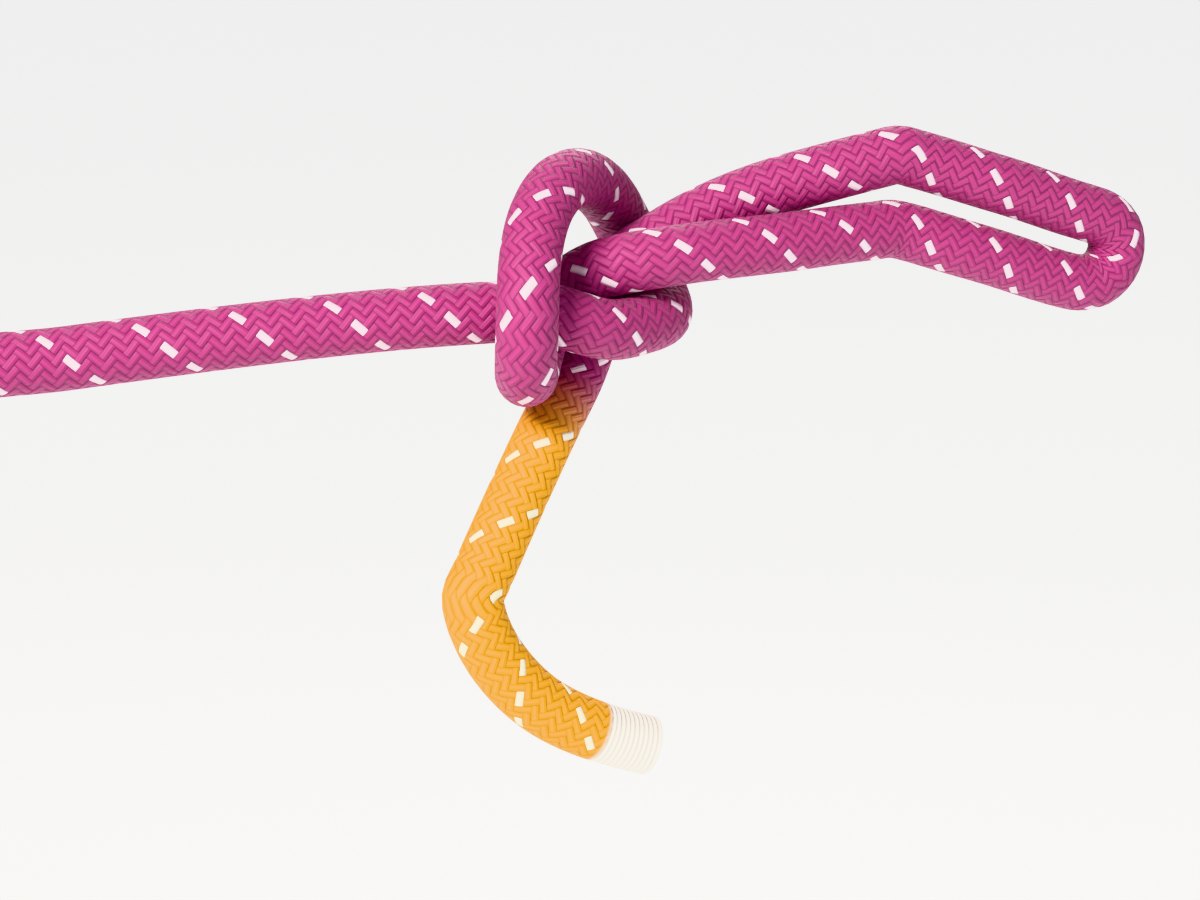 Draw-loopPull to free
Child · quick release
Slipped overhand
Pass a bight of the end through the loop instead of the end itself. It holds like an overhand, but a pull on the free end draws the bight out and the knot falls open - no picking at a jammed knot.
Watch it tied and released
The roll of descendants
The knot that starts other knots
Look closely at many well-known knots and you will find an overhand, or a few of its turns, inside.
The half knot that starts a shoelace bow or a parcel is an overhand tied round something. Tie one half knot, then another the opposite way, and you have a square knot; the same way twice gives the granny.
Two lines laid side by side, each tied in an overhand round the other, then slid together. With double overhands it becomes the double fisherman’s, a classic way to join two ropes into a loop.
The wraps that grip a fishing line in the blood knot and the uni knot are a multiple overhand’s turns, stretched out and counted.
Give the end one more half turn round the standing part before it goes through the loop and the overhand becomes the figure 8.
Tie a loose overhand in one end of flat webbing, then follow it back with the other end: the ring bend climbers use to join tape.
Tied in a doubled line it makes a fixed loop - the quickest loop knot there is (see its family portrait above).
Interactive 3D
Turn it in your hands
Drag to walk round the knot, pinch in on the crossings, scrub back to any step, or glow the working end to follow it through the loop.
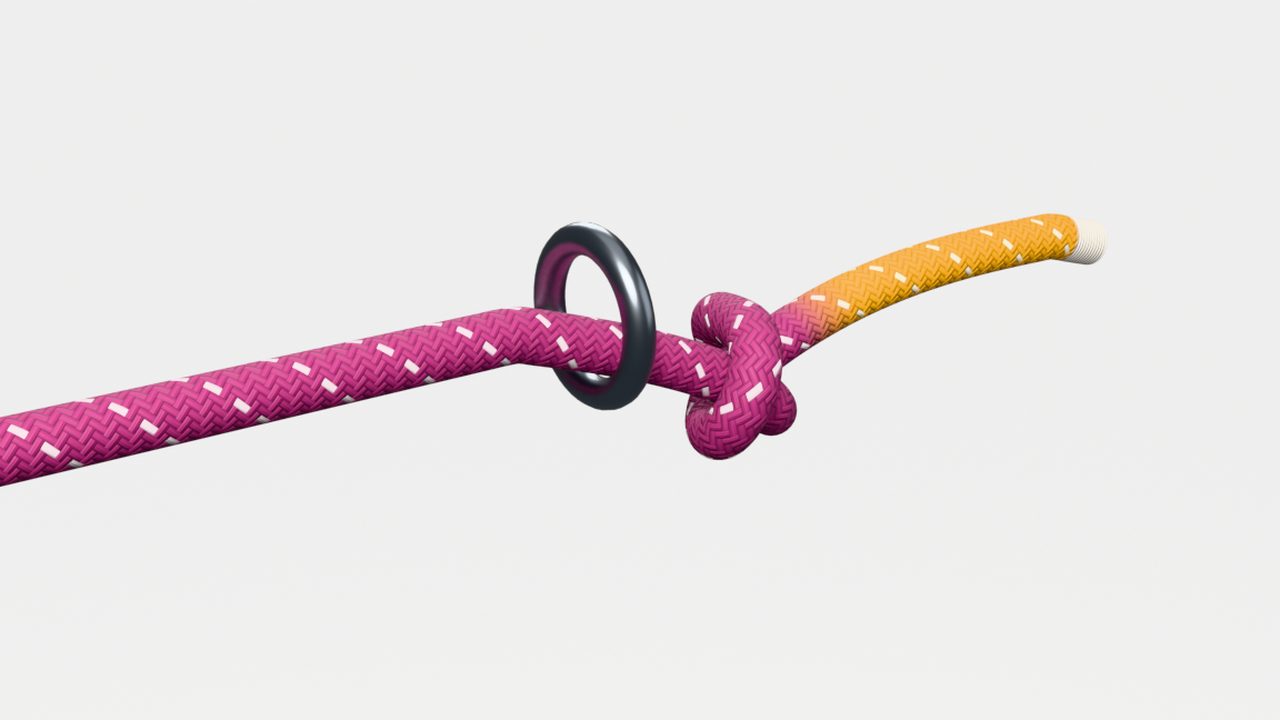
· Drag to turn · pinch to zoom
Why learn it
Common uses
A stopper in a rope end
Keeps a line from running out through a ring, an eyelet, a pulley or a cleat - a drawstring, a tent guy, a light line on a boat.
Stopping a fraying end
A quick overhand near a cut end keeps the strands from unravelling until you can whip or melt it.
Sewing thread
The knot at the end of the thread that stops it pulling through the cloth - often tied twice or three times over.
Beads and necklaces
Overhands between beads space them out and keep them from rubbing; one at each end stops them sliding off a cord.
Bags, balloons and bundles
Tied in the neck of a bag or a balloon, or as the first half knot round a bundle, a parcel or a shoelace.
The start of other knots
Learn it first: the square knot, the fisherman’s knot, the figure 8 and the blood knot all grow out of it.
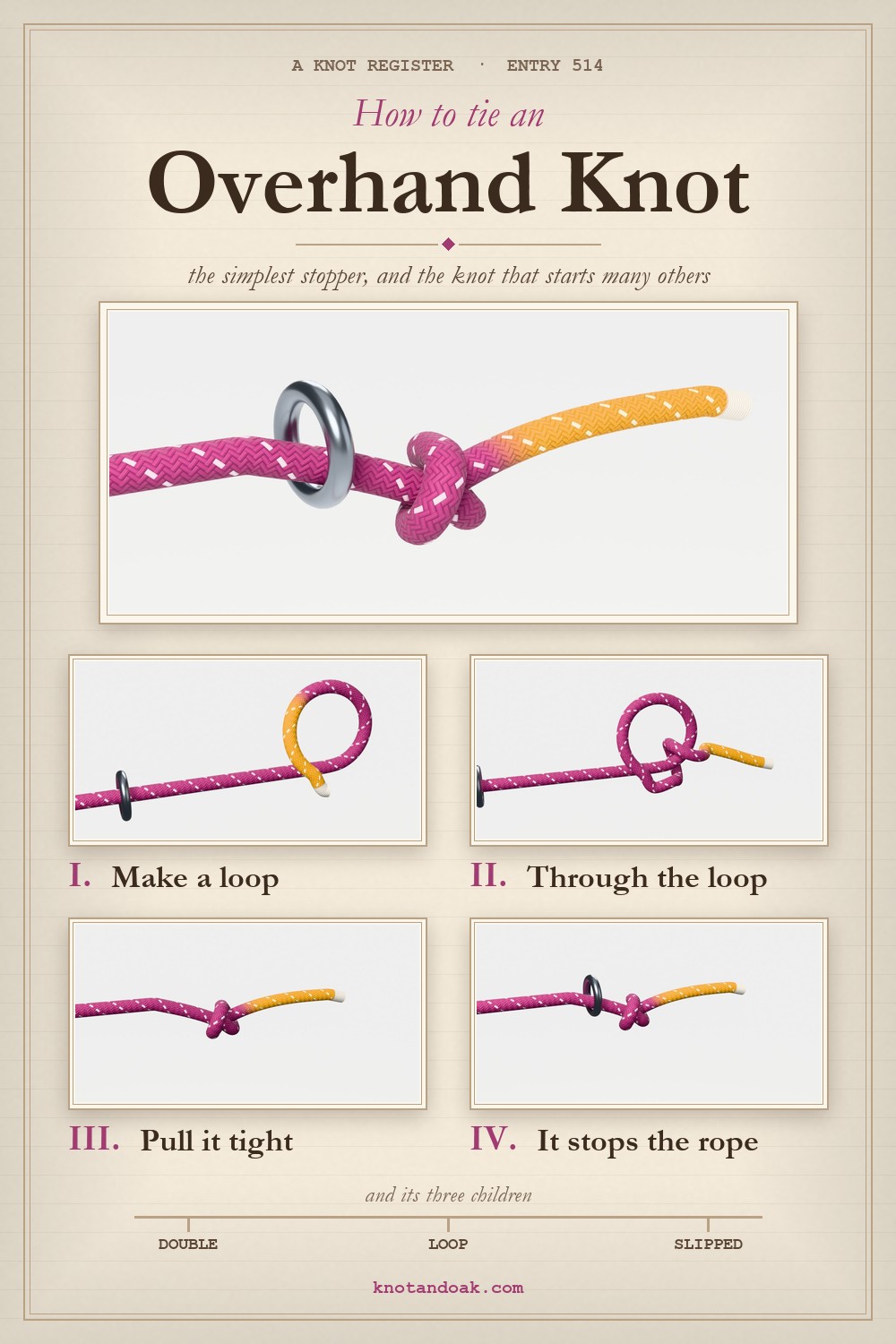
Take it with you
Pin the four entries
All four steps on one card. Pin it, or keep it with your sewing box, tackle or kit bag for the next time an end needs a stop.