


knotandoak.com · stopper knotsThe hoist above spells FIGURE 8
How to tie aFigure 8 Knot
The stopper knot. Tie it in the end of a rope and the rope can’t run out through a ring, a pulley or a belay device.
- TypeStopper
- Steps5
- Tail3–4 rope Ø
- RopeAny
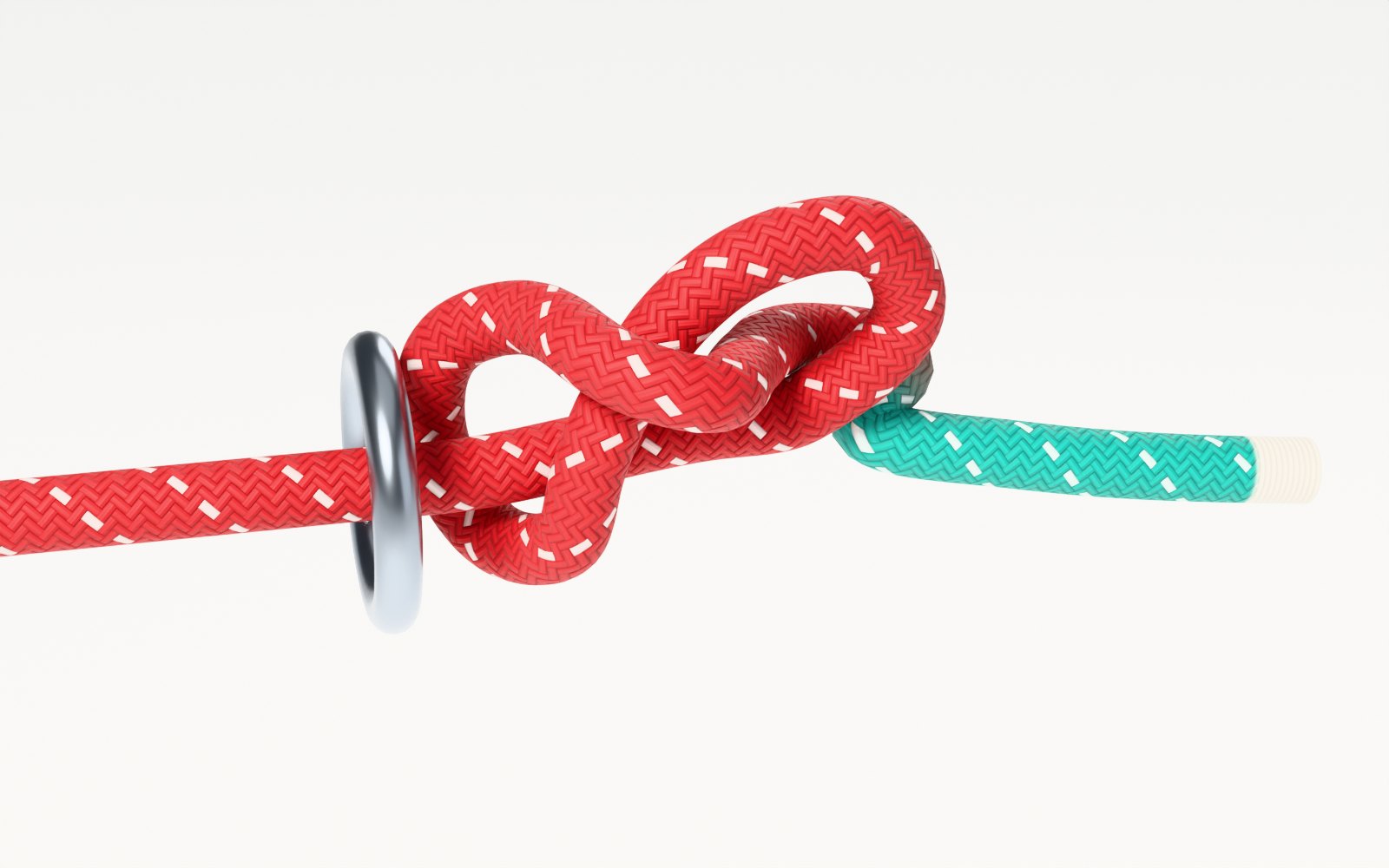 Standing partRingThe 8Short tail
Fig. 1 · pulled tight and stopped at the ring: the rope can’t follow the knot through
The whole knot · 9 s
Start to finish at 4×
A loop, round the back, through the loop, pull it tight, and the knot stops the rope at the ring.
- Loop
- Round
- Through
- Tight
- Stop
Before you start
Two ends of one rope
The figure 8 is tied with the working end round the standing part of the same rope. Here the rope runs through a ring, the thing the knot will stop at.
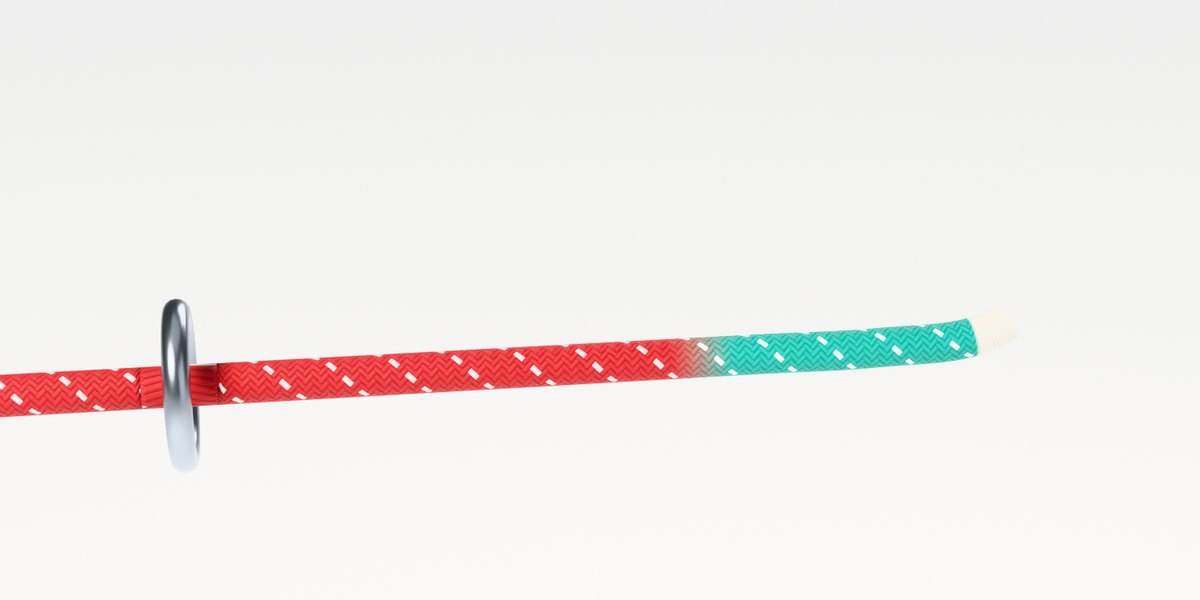 Standing partWorking endRing
Fig. 2 · the rope through the ring, before the first loop
- Standing part
The long, main part of the rope: the part that takes the pull.
- Working end
The end you tie with. Here it is marked aqua so you can follow it.
- Ring
Anything the rope passes through: a ring, a block, a fairlead, a belay device.
Step by step · each clip loops
Five steps to a figure 8
-
STEP17.5 s clip
Make a loop
Bring the working end up and round in a loop, then cross it over the front of the standing part.
TIPStart a forearm’s length from the end, so there is rope to work with.
-
STEP27 s clip
Round the back
Carry the end down and round behind the standing part, and back up on the far side.
TIPThis turn round the standing part is what makes an 8 rather than a plain overhand knot.
-
STEP38 s clip
Through the loop
Bring the end over the top and pass it through the first loop from the front, out the far side.
TIPLook before you pull: you should already see the two loops of the 8.
-
STEP47 s clip
Pull it tight
Pull the standing part and the tail apart until the loops close into a neat, compact 8.
TIPDress it as it closes: no twisted or crossed strands, then snug it hard.
-
STEP57 s clip
It stops the rope
Pull the standing part back through the ring. The knot is too bulky to pass and jams against it.
TIPIt works the same at a pulley, a block, a fairlead or a belay device.
Done: a figure 8 in the end of the rope, stopped at the ring
Before you trust it
Hoist the four flags
Each tick hoists C (Charlie): “yes” in the signal code.
Why it works
A stopper: bulk where the rope ends
- Too big to pass
The figure 8 packs several crossings of rope into one compact knot, several times thicker than the rope itself. The opening of a ring, a pulley or a belay device is sized for the rope, not for a knot, so the 8 jams there and the rope stops.
- It holds its shape
Under a pull it squeezes down into a firm, even 8 instead of rolling or pulling through, which makes it a better stopper than a single overhand knot.
- Leave a short tail
Leave about three to four rope diameters of end beyond the knot, so it can’t shake loose. A very long tail just gets in the way.
The family
The figure 8 loop: the climber’s tie-in
The same knot, tied with the rope doubled or traced twice, makes a strong fixed loop that is easy to check by eye.
Double the rope and tie the 8 with the doubled part: a loop to clip a carabiner into.
Tie a loose 8, pass the end through the harness tie-in points, then retrace the knot back along itself.
Safety: for climbing, learn the tie-in from a qualified instructor and have it checked before every climb.
Interactive 3D
Turn it in your hands
Drag to walk round the knot, pinch in on the crossings, scrub back to any step, or glow the working end to follow it through the 8.
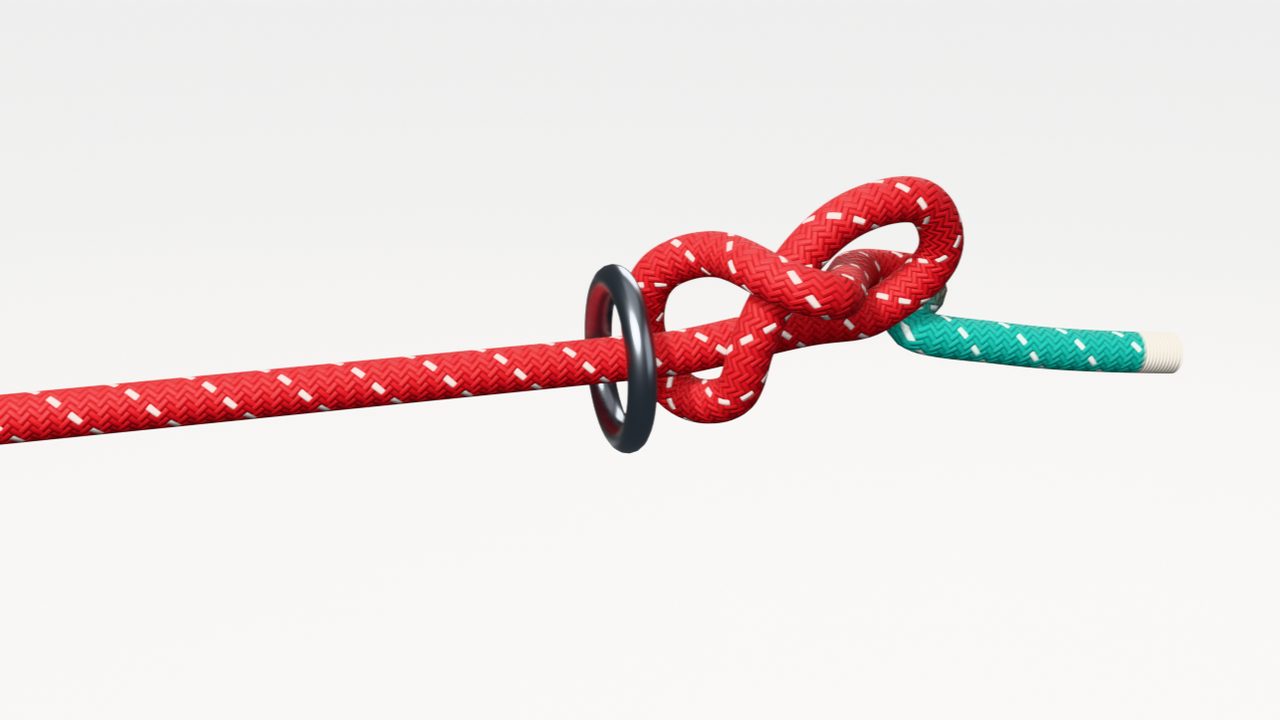
· Drag to turn · pinch to zoom
Why learn it
Common uses
Sheets and halyards
A figure 8 in the end of a sheet or halyard on a boat, so it can’t run out through a fairlead or block and fly away.
Pulleys and belay devices
A stopper in the end of a rope running through a pulley, or in the end of a climbing rope, so it can’t slip through the device.
Base of the figure 8 loop
Learn this one first: the figure 8 on a bight and the follow-through tie-in are both built on it.
Blocks, eyes and grommets
Keeps a rope end from pulling out and fraying through blocks, eyes and grommets.
Take it with you
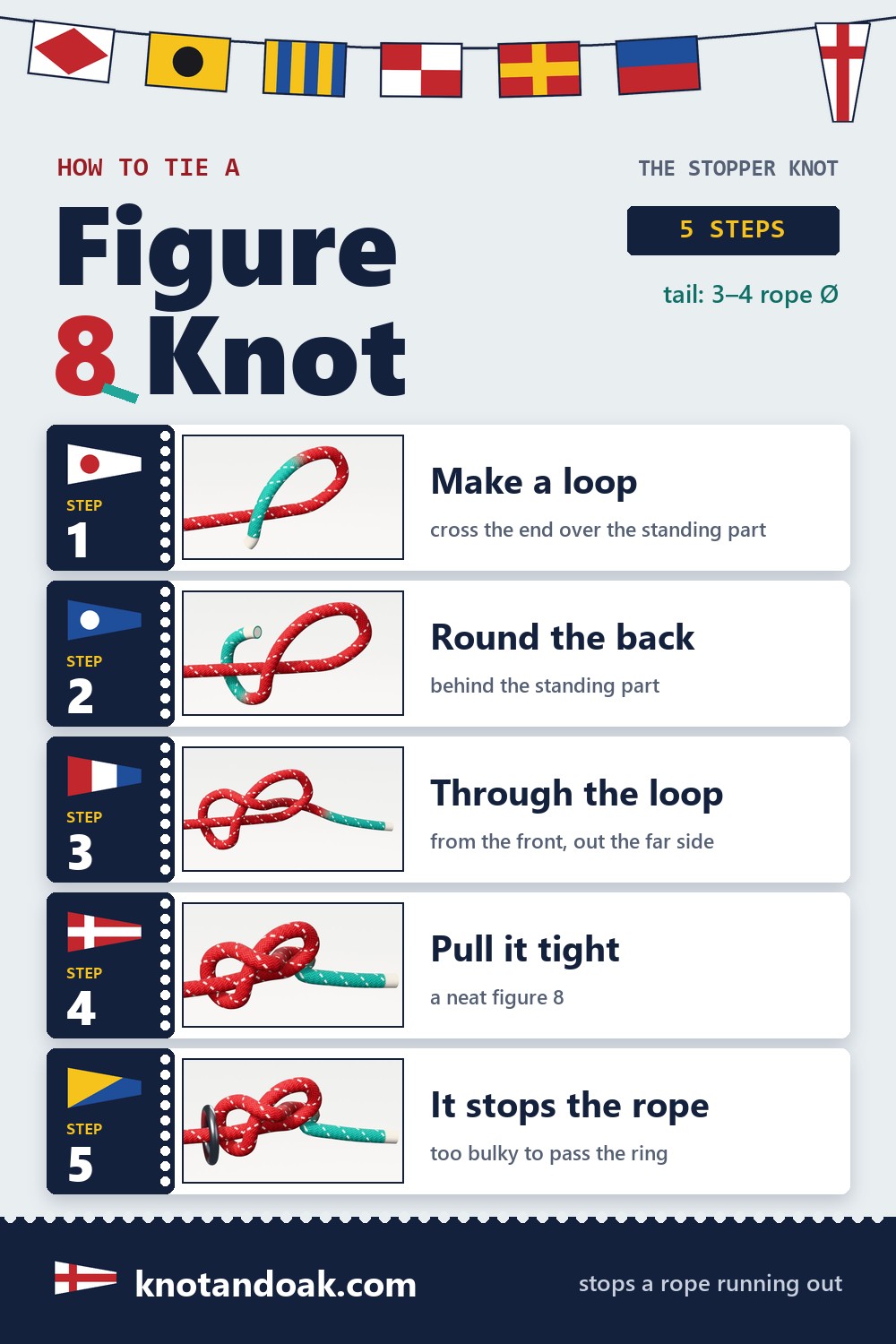
Pin the five steps
All five steps on one card. Pin it, or keep it with your gear for the next time a rope end needs a stopper.