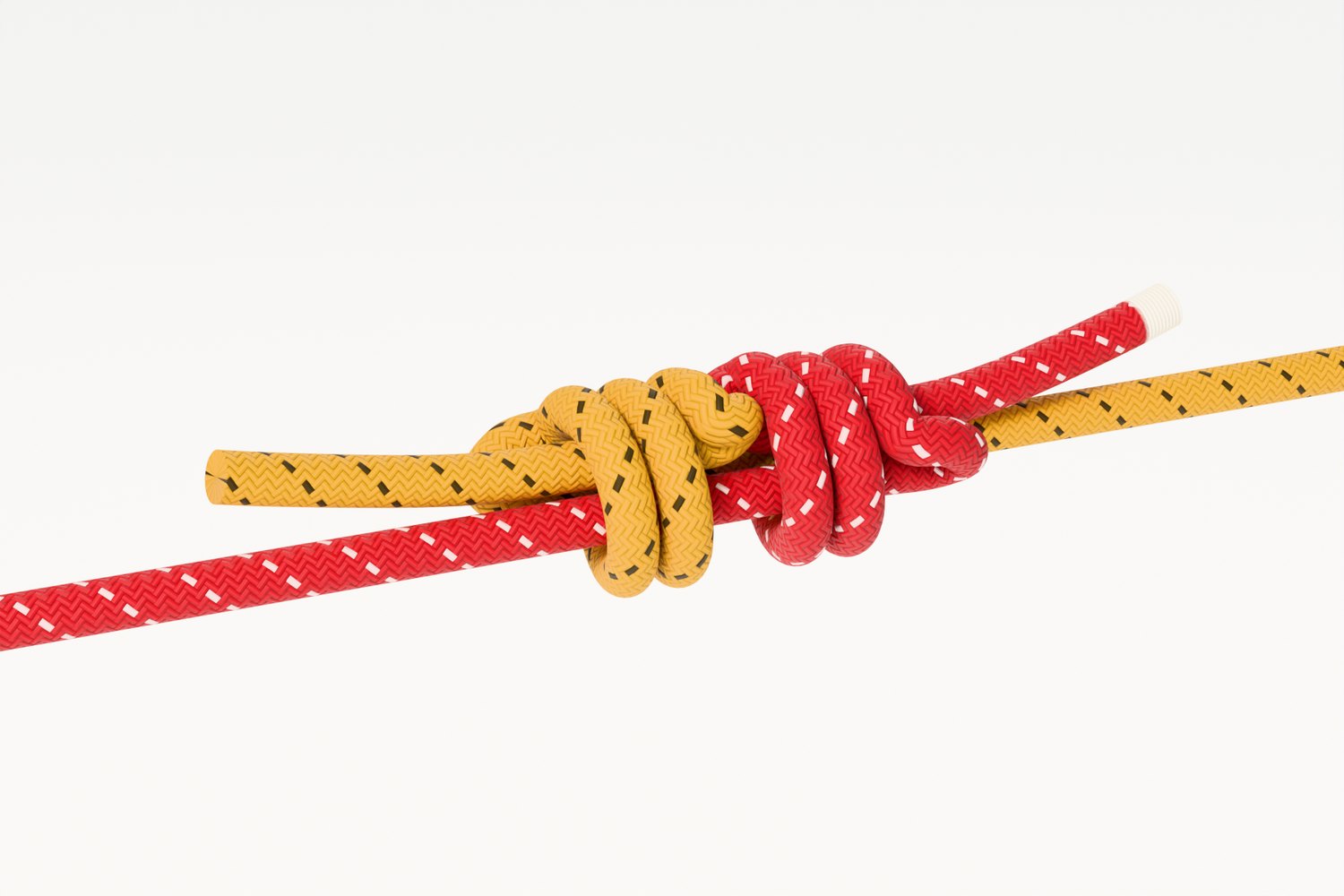
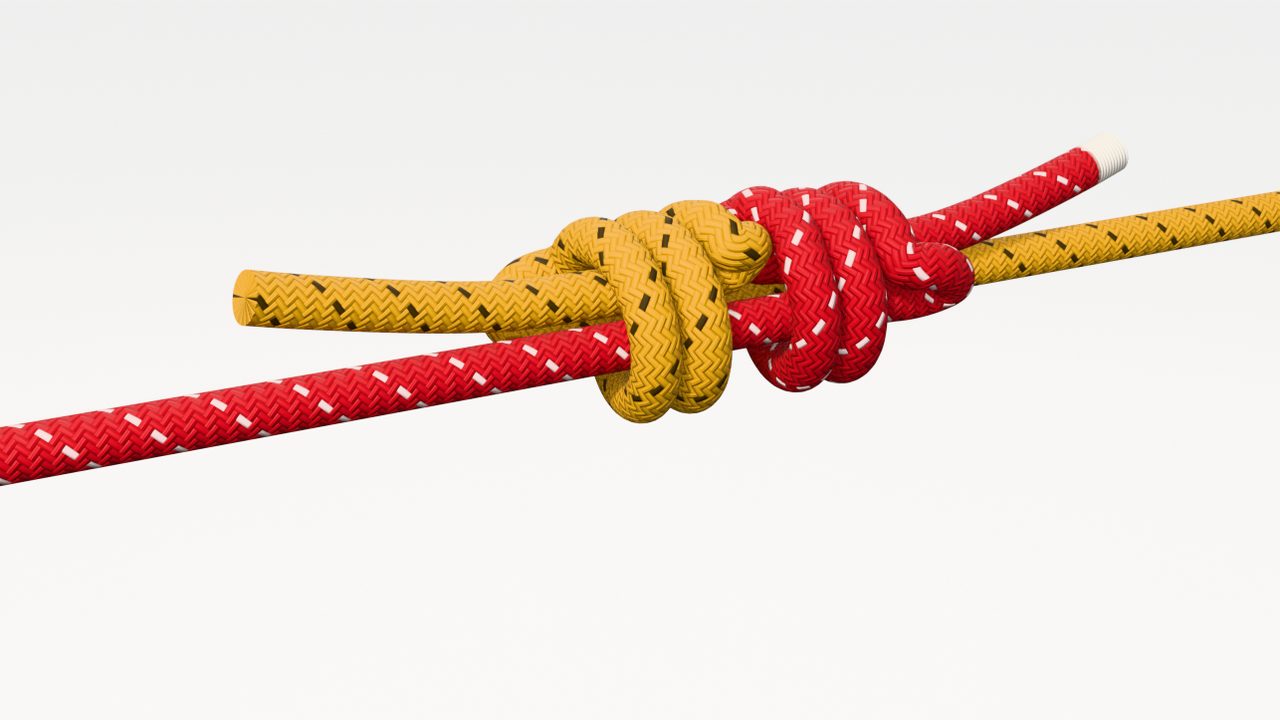
Pasted in: rope A meets rope B, two knots nested in the middle.
01Entry 01 · the whole route 11 s at 4×
The whole knot in eleven seconds
Overlap, wrap, tuck, the same again from the other side, snug, pull. Watch it once at speed, then go through it step by step.
Stamp passport · six huts
Overlap
Wrap
Tuck
Repeat
Snug
Pull
One stamp for each step as the clip passes it.
02Entry 02 · before you start kit check at the hut door
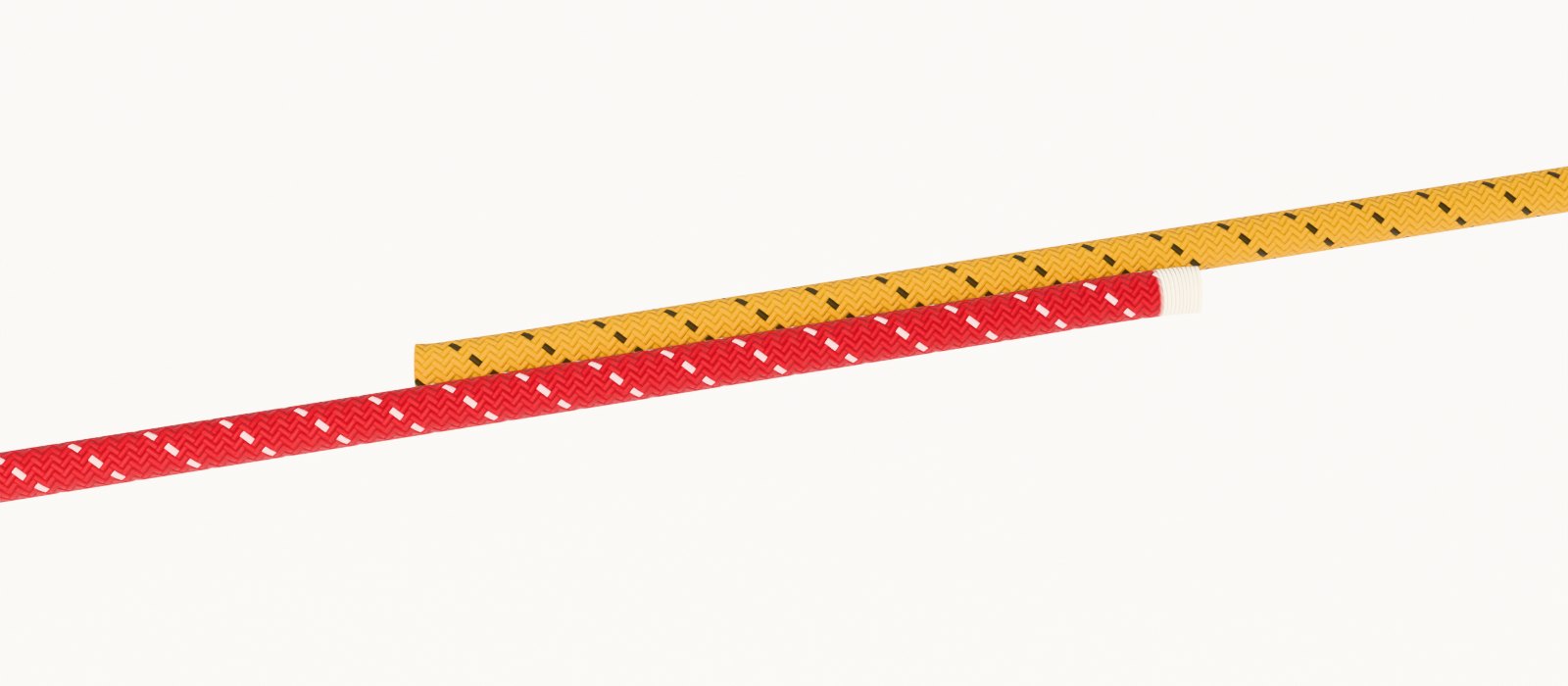
Two ropes, side by side
Rope ARope BThe overlap
Rope A comes in from the left, rope B from the right; their ends overlap with plenty to spare.
Similar diameters
It works best for two ropes of similar diameter, such as two lengths of the same cord or two climbing ropes.
Long tails
Leave each tail at least 10–12 times the rope diameter beyond its knot: about 8 cm (3 in) on 7 mm cord.
Dress the wraps
Lay each wrap neatly beside the last, with no crossings, so the knots tighten evenly and nest.
03Entry 03 · the ascent six huts, one stamp each
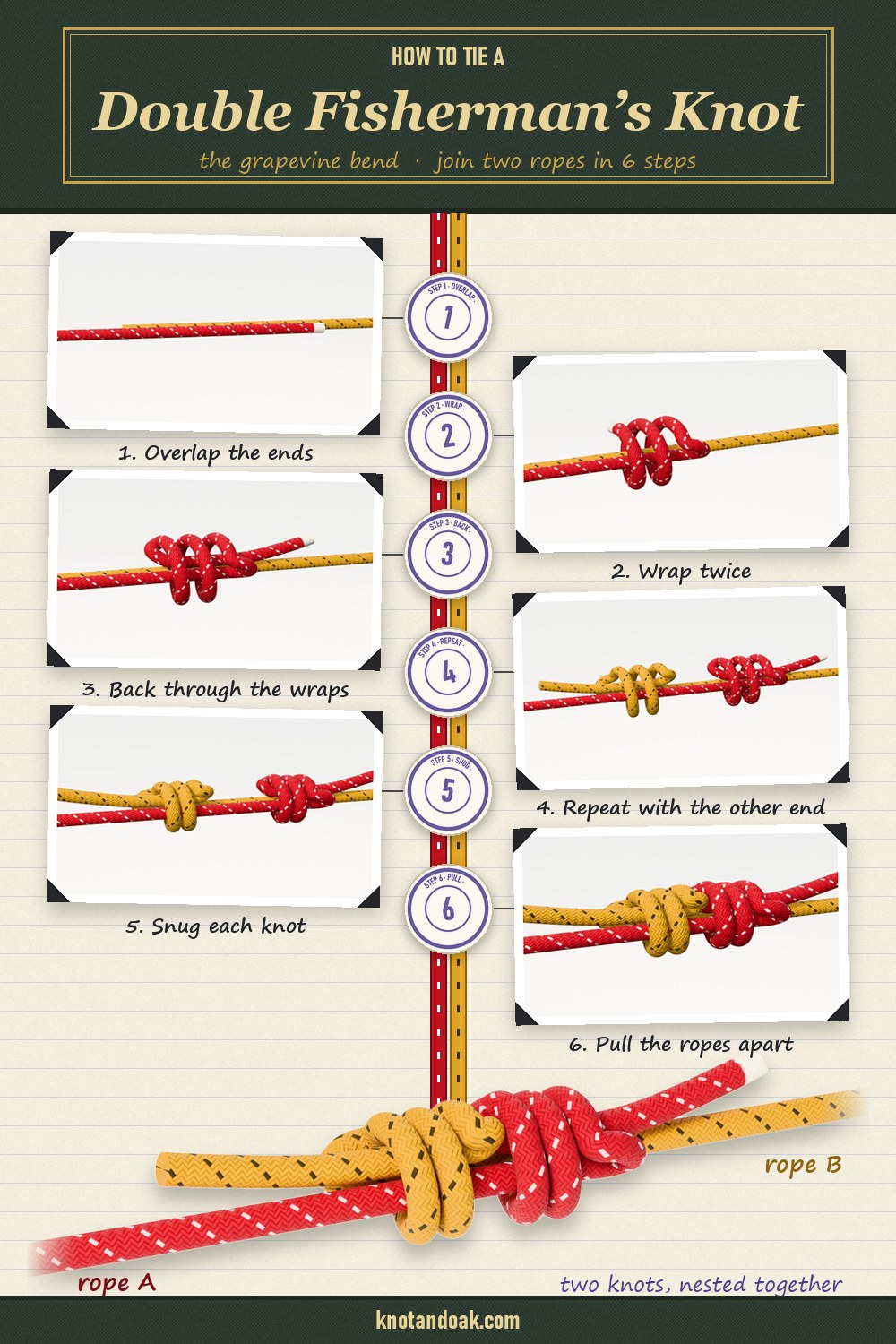
Six steps to a double fisherman’s
1
Step 1 of 6 · 6 s clip
Overlap the ends
Lay the two ends side by side, pointing opposite ways, with plenty of tail: about 30 cm (12 in) of each end past the other rope.
NoteKeep the two ropes parallel, not twisted round each other.
2
Step 2 of 6 · 9 s clip
Wrap twice
Take the end of rope A and wrap it twice round both ropes, working back towards the middle.
NoteLay the second wrap neatly beside the first, not over it.
3
Step 3 of 6 · 6 s clip
Back through the wraps
Tuck the end back through the inside of both wraps so it comes out beside the other rope, pointing away from the middle.
NoteThat is a double overhand tied round rope B: half the knot is done.
4
Step 4 of 6 · 12 s clip
Repeat with the other end
Do the same with the end of rope B: two wraps round both ropes towards the middle, then back through the wraps.
NoteIt is the same knot the other way round: turn the work end for end and the two halves match.
5
Step 5 of 6 · 6 s clip
Snug each knot
Work each knot down tight, pulling its end against its own rope so the wraps bed down side by side.
NoteDress first, then tighten: crossed wraps will not sit flat.
6
Step 6 of 6 · 6 s clip
Pull the ropes apart
Pull the two ropes in opposite directions. The knots slide together and nest in the middle.
NoteFinish with a firm pull on both ropes to seat the knots against each other.
Summit: two knots nested together, a tail leading out of each
One face: two XsOther face: four parallel lines
04Entry 04 · warden’s inspection tick each one off
Two knots nested together
05Entry 05 · the warden’s notes pinned up by the stove
Triples, Prusik loops and loaded knots
Variant · 3 wraps
The triple fisherman’s
Tie each half with three wraps instead of two, then tuck back through all three. The extra turn gives slick or stiff cord more to grip, such as Dyneema or aramid-cored accessory cord.
Longer and bulkier, but it holds where two wraps might creep.Make one · a Prusik loop
A Prusik loop from cord
Cut about 1.2–1.5 m of accessory cord a few millimetres thinner than your rope (5–7 mm for a 9–11 mm rope), lay the two ends together and tie them with a double fisherman’s to close the loop.
Leave long tails and pull it hard before first use.Property · after a load
Hard to untie after loading
Once it has held a real load, a body weight or a fall, the double fisherman’s cinches very tight and can be close to impossible to undo. That is why it suits joins meant to stay tied: Prusik loops, cordelettes, closed slings.
For a join you will want to take apart often, choose a different bend.
06Entry 06 · on the slate board interactive 3D
Turn it over in 3D
Drag to turn the knot and see both faces, pinch in on the wraps, scrub back to any step, or glow rope A to follow it through its knot and out the far side.