


How to tie aClove Hitch
A quick, adjustable hitch for tying a rope to a post, rail or pole, and the classic start for a lashing.
- For posts & rails
- Two turns
- Adjusts easily
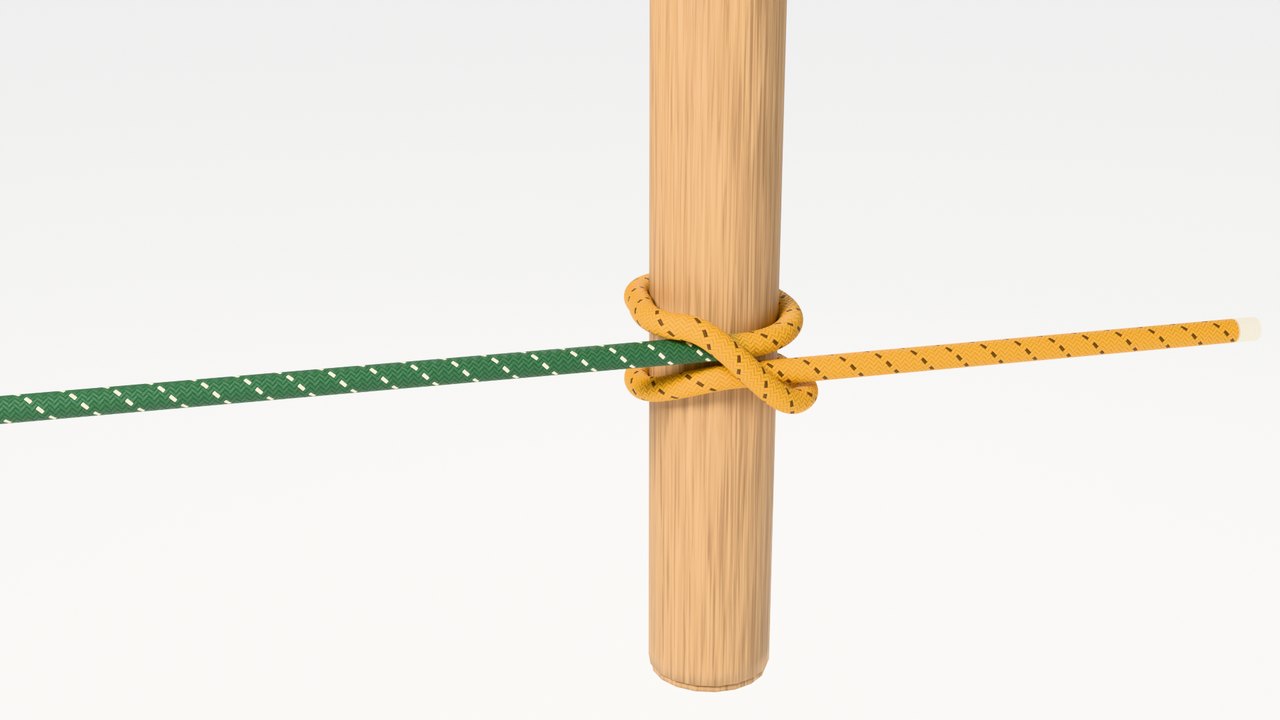 Standing part
End
The X
Post
Standing part
End
The X
Post
The whole hitch
Round the post, cross over, round again, tuck under the X, pull tight.
Both ends leave under the X, going opposite ways.
Walk round the post
Drag to circle the post, pinch in close to the X, scrub back to any turn.
· Drag to turn · pinch to zoom
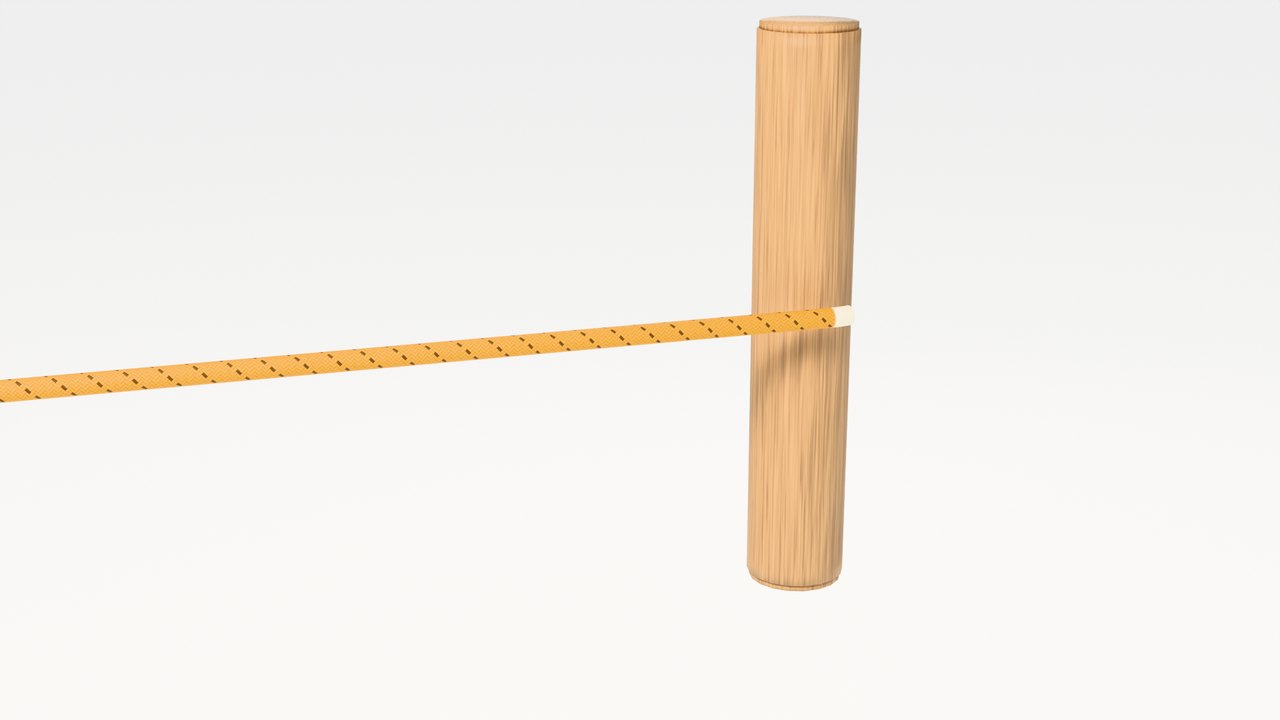 Working end
Post
Working end
Post
Know the parts
- Standing part
- The long part of the rope that takes the load.
- Working end
- The end you wrap round the post.
- Turn
- One full wrap round the post. A clove hitch has two.
You need: rope or cord, and a post, rail or pole.
Five wraps up the post
-
Round the post
Pass the working end round the post once.
TipLeave a long working end: it goes round twice.
-
Cross over
Bring the end round and across the front, over the standing part, making an X.
Watch forThe crossing goes over the standing part, not under it.
-
Round again
Take the end round the post again, right beside the first turn.
TipKeep the two turns neatly side by side.
-
Tuck under the X
Bring the end up and tuck it under the X so it comes out the other side.
Watch forThe end leaves in the opposite direction to the standing part.
-
Pull tight
Pull the end and the standing part to snug both turns onto the post.
TipFor a load that moves about, add a half hitch round the standing part.
Trail check
Where you’ll use it
Use it when you need to tie on to a post or pole quickly and adjust the rope afterwards.
Mooring
A quick, temporary tie to a post or bollard.
Camping
Guy lines, tarps and ridge lines on poles and trees.
Lashings
The usual start and finish for square and tripod lashings.
Fences & gardens
A line run along a row of posts or stakes.
Safety: a clove hitch can work loose when the load keeps changing. Add a half hitch or two round the standing part if it matters.
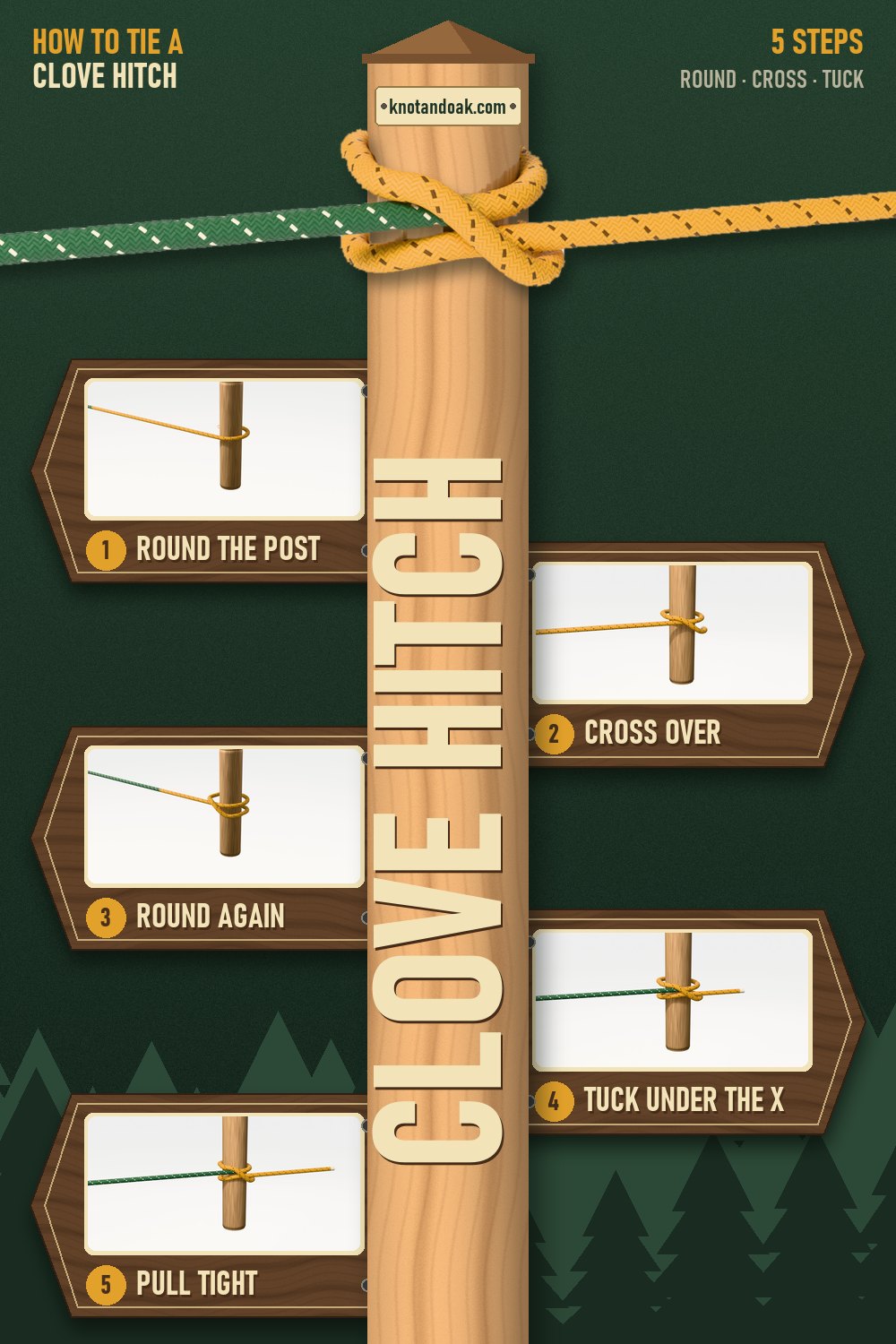
Save the trail card
All five steps on one card. Pin it or keep it with your gear for the next time you tie on.