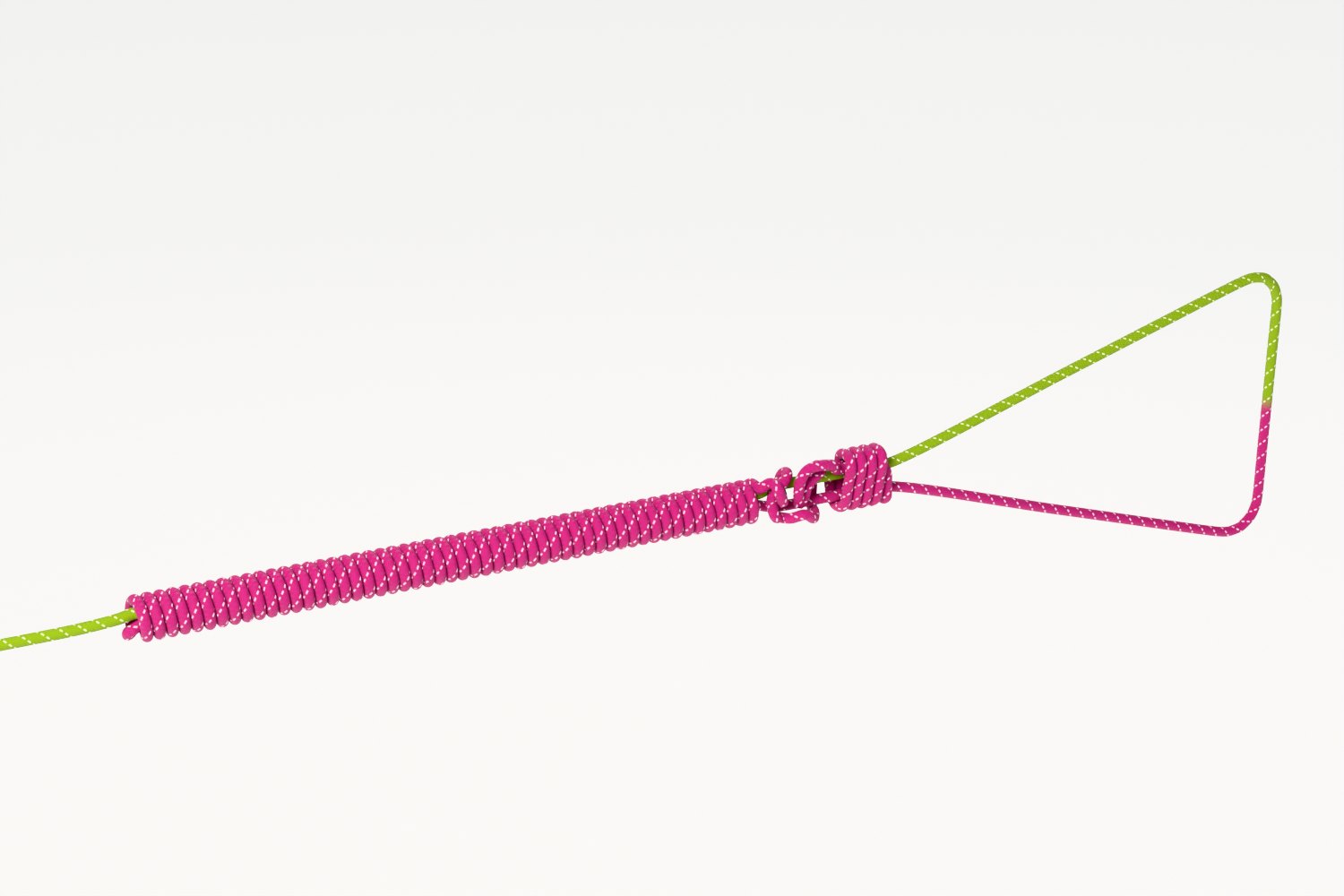
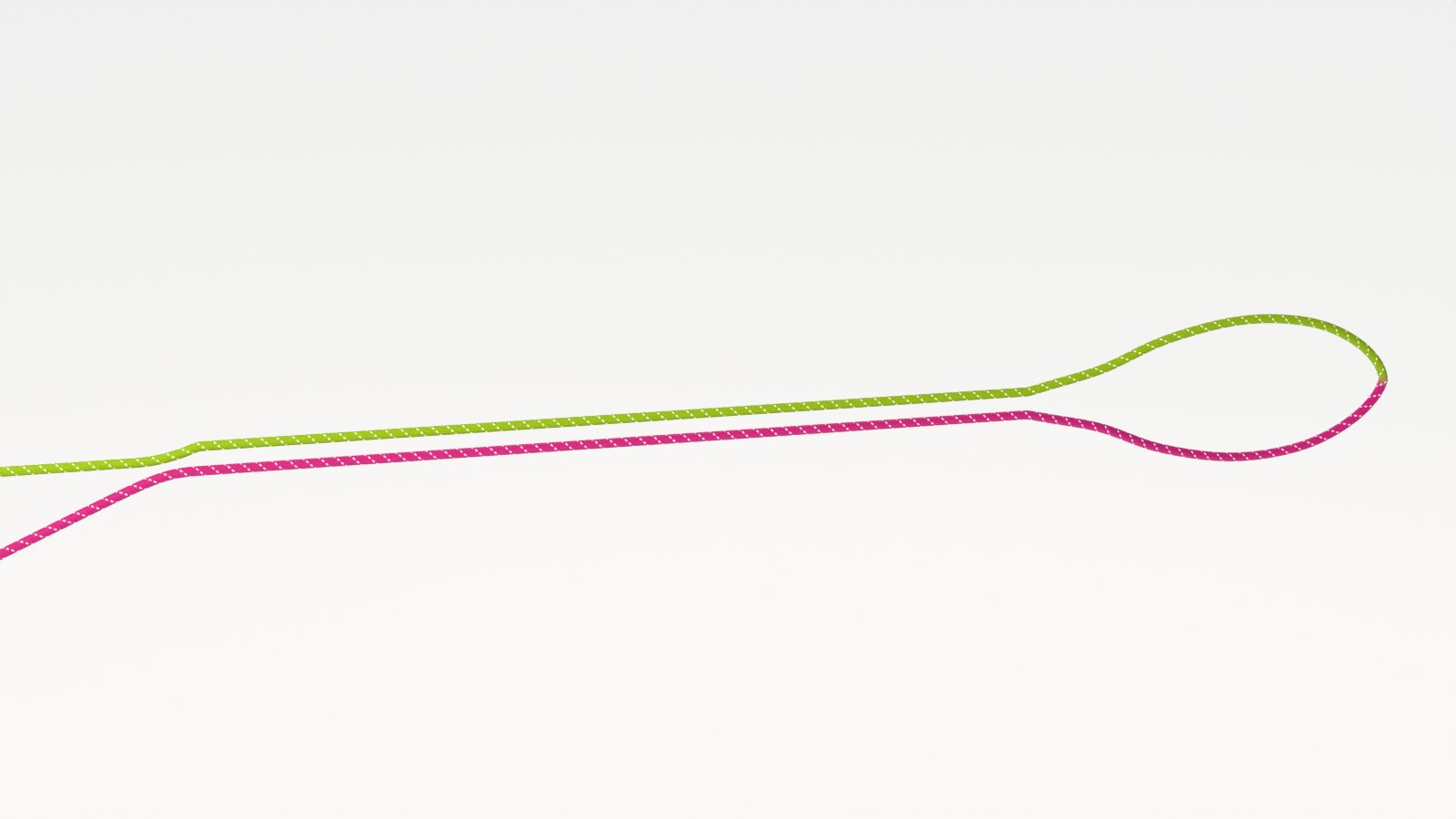
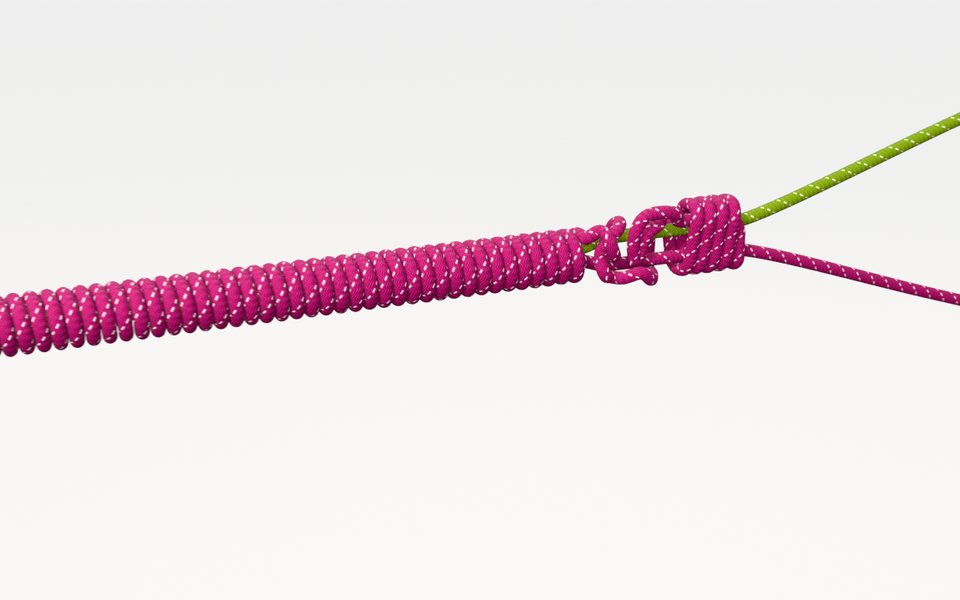
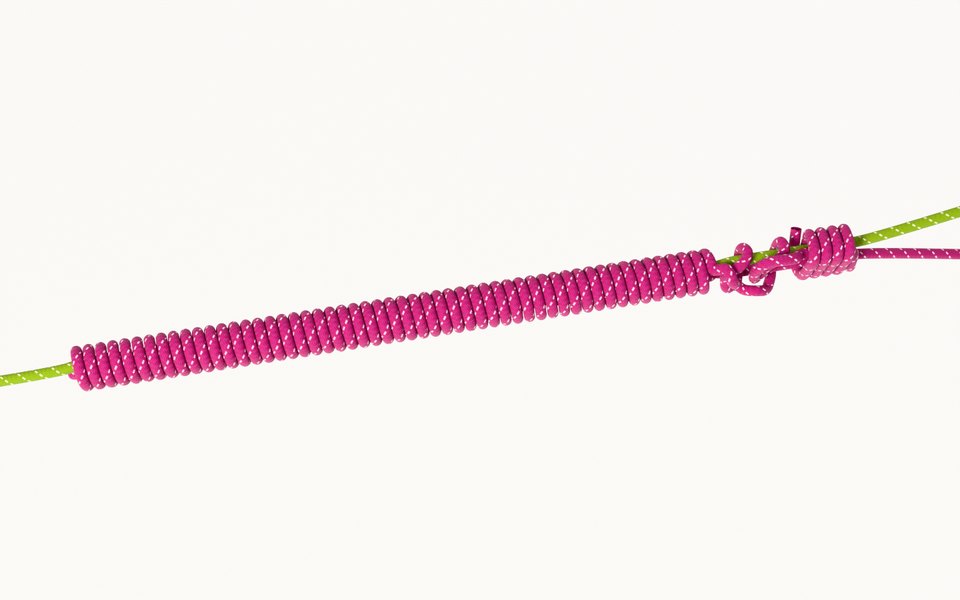
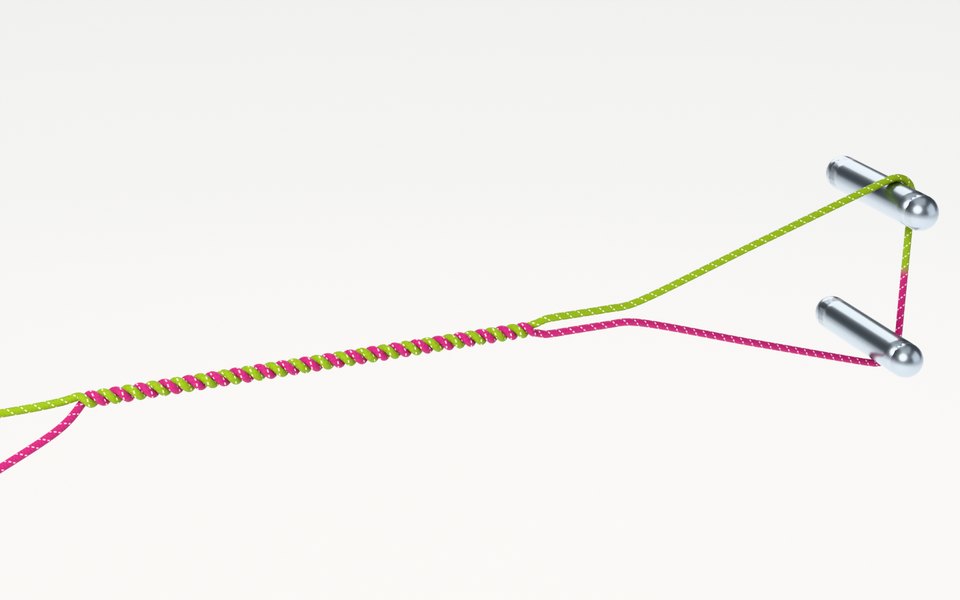
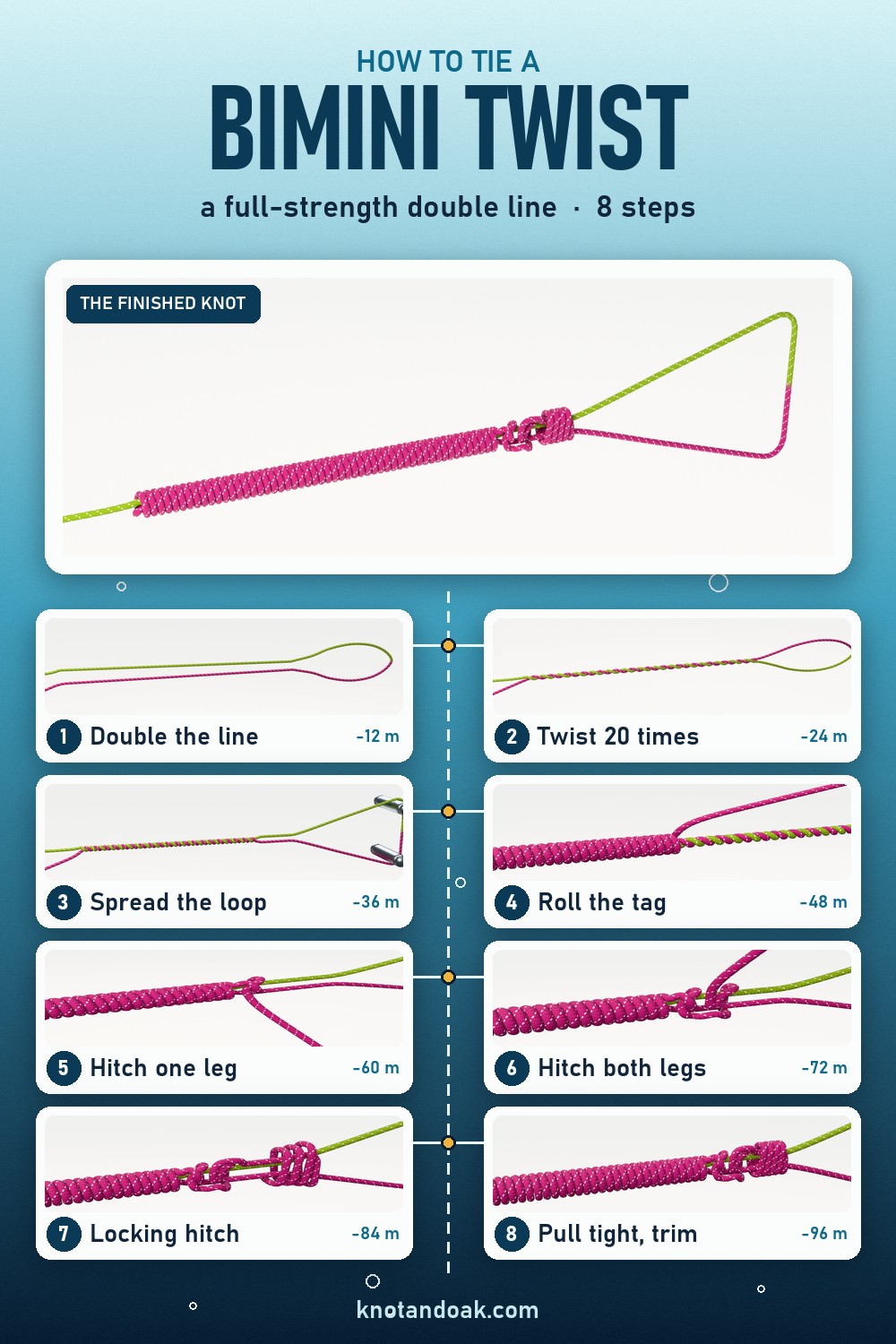
The Bimini twist turns the end of your line into a long double line without losing strength: 20
twists, a barrel of rolled wraps and a locking hitch. It is the classic start for offshore trolling rigs and leader
connections. Eight stations, top to bottom.
Standing partWraps over 20 twistsTwo half hitchesLocking hitchDouble line
20twists for nylon or fluorocarbon
30+twists for braid
1.5 m(5 ft) of line doubled
~100%of the line’s strength kept
−6 mThe whole knot
The whole Bimini twist, sped up
Double, twist, spread, roll, hitch, hitch, lock, trim: four times real speed, twice through the twisting and the rolling. Watch it once, then go station by station.
−10 mBefore you start
Standing partTag endThe loop
Line, loop and a pair of knees
The standing part runs to the reel; the tag end is the line you fold back.
Doubled, they make a long loop, and that loop becomes the double line.
About 1.5 m (5 ft) doubled for a short double line; more for a long one.
Something to spread the loop: your knees while seated, a cleat, a rod butt or two pegs.
Water to wet the hitches, and clippers.
−12 mThe descent
How to tie it, in eight stations
Each station is one move. The clips loop; tap one to pause it, or play it at half speed.
1Station 1 of 8 · −12 m
Double the line
Fold back about 1.5 m (5 ft) of line so the tag end lies alongside the standing part. The fold is the end of a long, narrow loop.
Dive noteGive yourself plenty: the wraps eat more tag than you expect. A short tag runs out before you reach the V.
2Station 2 of 8 · −24 m
Twist the loop 20 times
Hold the standing part and tag together in one hand, put the other hand inside the loop and turn the loop end 20 times. The two legs twist round each other along the line.
Dive noteCount every full turn. 20 is right for nylon and fluorocarbon; braid needs 30 or more.
3Station 3 of 8 · −36 m
Spread the loop
Slip the loop over your knees, a cleat or two pegs and spread it. The twists pack down tight and the column gets shorter and harder.
Dive noteKeep the standing part pulled straight away from you. From here to the end the knot must stay under tension.
4Station 4 of 8 · −48 m
Roll the tag over the twists
Hold the tag at right angles to the twists and slowly ease it while you keep spreading the loop. It rolls back over the twists in tight, close wraps, all the way down to the V of the loop.
Dive noteDon’t wind it on by hand: let the twists do the rolling, and only guide the tag. Stop when the wraps reach the V.
5Station 5 of 8 · −60 m
Half hitch round one leg
Pinch the wraps so they cannot unroll, and make a half hitch round one leg of the loop. Snug it down against the last wrap.
Dive noteThis hitch is what locks the wraps. You can let go of the tension once it is pulled tight.
6Station 6 of 8 · −72 m
Half hitch round both legs
Make a second half hitch round both legs of the loop and snug it down beside the first.
Dive noteSeat each hitch before you start the next; slack here shows up as a lumpy finish.
7Station 7 of 8 · −84 m
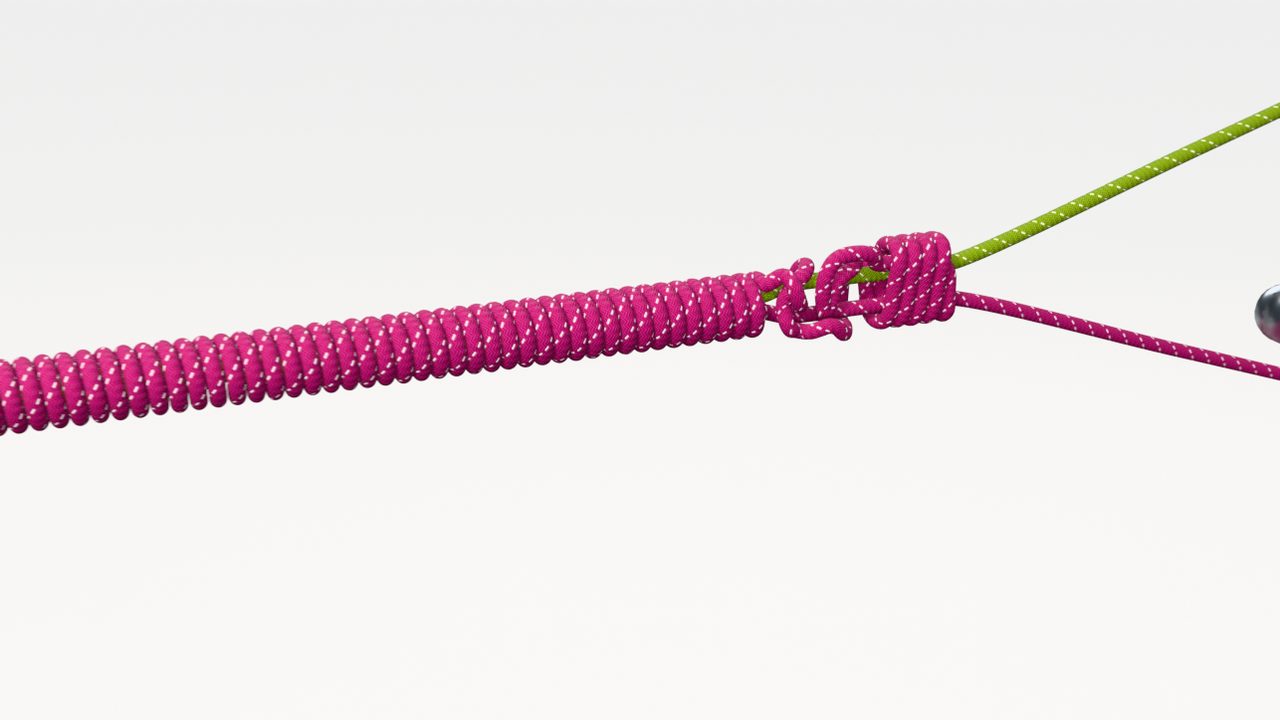
Locking hitch, four turns
Take the tag out along both legs and round them, then make three to five turns round both legs inside that bend, working back toward the knot.
Dive noteFour turns is a good number. Keep them side by side so they bed down as a neat little barrel.
8Station 8 of 8 · −96 m
Pull tight and trim
Wet it, pull the tag to close the locking hitch down against the knot, then trim the tag to about 6 mm (¼ in).
Dive noteLeave the stub: a flush cut on heavy mono can pull back through the last turns.
−104 mSafety stop
Check it before you fish it
Wraps side by side with no gaps, hitches snug at the V.The barrel from above: one smooth, even layer.
−120 mTwists by line
How many twists?
20 full turns of the loop is the standard. Slippery or very thin line needs more grip, so add turns.
Nylon mono
20
Fluorocarbon
20
Braid
30
Thin braid
40
20 twists, packed tight by spreading the loop.
Why it keeps full strength
Load goes into the double line and is fed gradually through the twists and
the wraps, so no single tight bend takes it all. Most knots bend the line sharply in one place, which is where
they break; a well-tied Bimini spreads the strain along the whole barrel.
−140 mConnections
What the double line is for
Loop to loop
Wind-on and loop leaders
Pass the Bimini loop through the leader’s loop, then pass the whole leader back through the Bimini loop
and pull the two loops together like two hands shaking. Quick to change at sea.
Double line to leader
Albright, FG or a uni to uni
Treat the two legs of the loop as one thick line and tie it to a heavier leader: an Albright knot is the
classic for mono, an FG for braid. See our FG knot vs Albright knot comparison.
Quick alternative
The spider hitch
When you need a double line fast, the spider hitch makes one with a few wraps round the thumb. It is quicker
and easier, but weaker than a good Bimini on heavy line.
Long double lines
Trolling and records
Offshore anglers tie long Bimini loops so the double line reaches the reel during the last of the fight.
Record rules limit its length on lighter line classes, so check them before you tie a long one.
Quick answers
Can I tie it without spreading it over my knees?
Yes: hook the loop over a cleat, a
rod butt or a doorhandle and spread it with your fingers. What matters is that the twists stay packed and under
tension while the tag rolls.
Why do the wraps refuse to roll?
Too little tension on the loop, or the tag held too
close to the twists. Spread the loop harder and hold the tag out at a right angle.
How long should the loop be?
For a leader connection, a loop of 30–60 cm
(1–2 ft) is plenty. For trolling double lines, anglers tie loops of several metres.
−165 mSubmersible viewport
Turn the knot in 3D
Drag to turn, pinch in on the barrel, scrub back to any station, or glow the tag end to follow it from the loop to the last hitch.
Live model · 8 stationsDrag · pinch · scrub
·Drag to turn · pinch to zoom
0:00
−190 mCommon uses
Common uses
Troll
Offshore trolling
A double line ahead of the leader for marlin, sailfish, tuna and wahoo.
Lead
Leader connections
Doubles the main line before an Albright, FG or loop-to-loop join to a heavy leader.
Loop
Wind-on leaders
A neat, strong loop for loop-to-loop wind-on leaders that pass through the guides.
Surf
Shock leaders
Surf and rock anglers double the line before tying on a shock leader for long casts.
Light
Light-tackle records
Fishing light line near its limit, where every percent of knot strength counts.
Jig
Jigging and popping
Braid doubled with 30+ twists before the leader knot.
−200 mSeabed
Save the dive plan
All eight stations on one card. Pin it for the next time you rig a double line on the boat.